
Farmhouse properties give you more room, more quiet and more chores than a normal city house. This complete farmhouse properties guide for Anchorage covers everything to check before you buy, from roads to wells.
Anchorage offers mild winters by Alaska standards and a lower cost of living than rural Alaska, so the Alaskan lifestyle feels easier here than most people expect.
What counts as a farmhouse in Anchorage?
A farmhouse is a home with enough land for growing, building or keeping things that don’t fit on a city lot. Brokers usually market these as a hobby farm, small acreage homes or homes with land. Most are a rural property with extra acreage around the house.
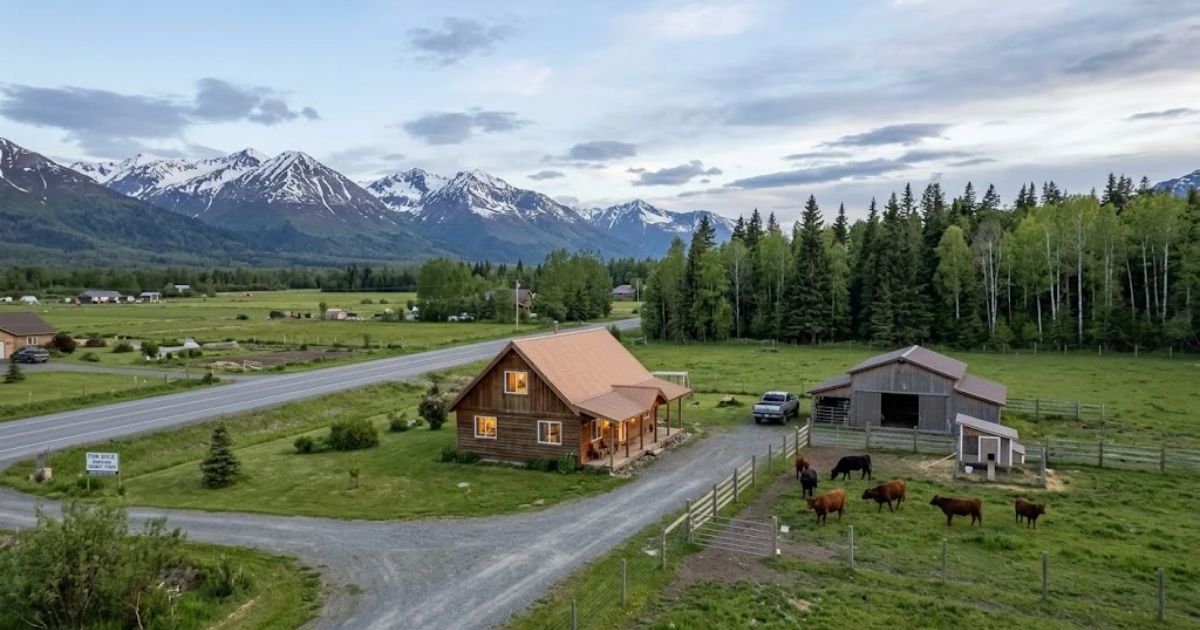
In a city of just over 300,000 people, Anchorage real estate rarely includes true farmland, so many buyers widen their search across Alaska real estate listings. An agricultural property also carries rules you won’t meet on a small city lot. Most buyers want self-sufficiency, a little homesteading and a calmer rural lifestyle, so I’d write those goals down before touring anything.
Where can you find farm-style homes near the city?
Most farm-style land sits north of the city in the Mat-Su Valley. Wasilla, Big Lake and Willow all carry listings for country homes. Each town trades lot size against drive length and nearby shopping, so compare them side by side before you fall for any single listing.
Drive farther to Talkeetna, Sutton, Butte, Meadow Lakes or Houston if you want a quieter feel. Visit each place on a weekday and again on a weekend, because traffic and noise change fast. My rule: compare at least three towns before you tour a single house.
Which Anchorage neighborhoods have the roomiest lots?
Inside the municipality, Hillside, Rabbit Creek and Bear Valley often give you the most elbow room. Eagle River and Chugiak sit north of the core, while Girdwood sits south in the mountains. Check each lot’s real size, because neighborhood labels can mislead you.
If you want city services more than land, look at South Anchorage, Kempton Hills and East Anchorage instead. It still sits close to the Chugach Foothills, so you keep trail access. Pick the area that fits your daily drive first, then narrow the search by lot size.
Is Palmer a good choice for farm life?
Yes, Palmer works well because it sits about 42 miles northeast of Anchorage in the Matanuska Valley. You reach it by the Glenn Highway, and local guides focus on the 99645 area when they talk about small farms. The town grew from the 1935 Matanuska Colony, so farming still shapes daily life.
The town gives you small-town charm without giving up everyday shops. Hikers and skiers love Hatcher Pass for outdoor recreation across the seasons. Drive your route in January before you commit, because winter tells the truth about any road.
Who sets the rules for your land?
Your parcel’s jurisdiction decides which rules apply, so confirm whether it sits inside city limits or under the Mat-Su Borough. Inside the city, the municipal code and state building codes apply. Outside, the borough uses its own permitting rules, which can differ from the city’s.
Check zoning first, and look for agricultural zoning if you want crops or animals. Most new structures need a building permit, while some projects outside the city need a land use permit. Near water, the borough requires a Mandatory Land Use Permit with a site plan that shows setbacks and waterbody setbacks.
Do you need a permit for a driveway?
It depends on the road you connect to. The borough requires a driveway permit when you build a new driveway, widen one, or tie into a borough road. Reviewers check drainage, line of sight and culverts before they approve the work, so apply early.
A private road needs no borough permit, but a state-maintained road may need a state one. Ask about road maintenance, find out whether the lot sits in a road service area, and watch for any unmaintained road segment. Without legal access, even a perfect lot won’t help you.
How does a flood zone change your plans?
It can change everything you plan to build on the lot. In the borough, a structure in a Special Flood Hazard Area needs a floodplain development permit. It must also sit two feet above Base Flood Elevation, which can add real cost to the foundation.
Check the flood hazard status early in your due diligence. A good buyer’s guide puts this step near the top of the list. Then book a home inspection, because water trouble often hides in crawl spaces and basements.
How do wells and septic tanks work on country land?
Most country homes run on a private well and a septic system, and the owner answers for water quality. Alaska DEC does not sample or regulate private drinking water wells, but it documents each onsite wastewater system. You can search those state records before you make an offer.
Ask the seller for well logs and past water testing results. DEC recommends nitrate testing and coliform testing at least once a year, and some areas also need arsenic checks. A local well and septic guide explains the rest in plain language, so read one before your first showing.
How hard is winter access on country roads?
Winter access can make or break a rural home, so confirm seasonal access before you fall in love. The borough starts snow removal once snow reaches 4 inches, and priority routes get plowing first. Crews do not plow every road, because some are private or unmaintained.
The borough maintains more than 1,100 miles of road, yet you still clear the snow berms that plows leave at your entrance. Study the gravel driveway and the cul-de-sac turnaround to see where the snow will go. If you own winter toys, plan RV parking, boat and trailer parking and ample parking for guests.
Can you add extra buildings to your land?
Often yes, but not automatically, because each parcel carries its own rules. Borough code lists a barn on agricultural land as an accessory use, so outbuildings are normal on country parcels. A detached shop still needs a parcel that allows it, plus any permits the city or borough requires.
In Palmer, a storage shed up to 320 square feet needs only a shed permit, while bigger buildings need a full permit. Shipping containers used for storage can qualify if they meet city rules. Plan your equipment storage early, whether you want a shop barn, a detached garage, a greenhouse or a garden shed for gardening.
How do ADU rules work in Palmer?
Palmer allows one accessory dwelling unit (ADU) on a residential or agricultural lot over 10,000 square feet. A detached unit that isn’t part of a garage needs a lot of at least 20,000 square feet. The city’s owner occupancy rule means you must live in one unit at least six months each year.
Detached ADUs stay under 25 feet tall and between 300 and 900 square feet, and the city wants a recorded covenant before it finalizes the permit. If you want extra living space without building, compare manufactured homes, multi-family buildings, a townhouse or a condo near the land you like. Buyers who prefer a blank slate can choose vacant land and new construction.
What styles of country homes can you buy?
Most buyers choose a single-family home, usually a ranch-style home or a two-story home. Others want a log house or a timber home with real character. Local guide photos show board-and-batten siding, a standing-seam roof and covered porches on lodge-style houses.
A big deck turns the yard into a second living room. Higher budgets open the door to luxury estate homes, mountainside homes and gated communities. Local brokers list luxury homes in several valley towns.
Which indoor features are worth paying for?
Light and space matter most during dark winters. Vaulted ceilings, cathedral ceilings and big windows bring in natural light, and an open floor plan makes small rooms feel larger. A primary suite with a walk-in closet adds daily comfort and gives you a calm place to retreat.
A walk-in pantry helps when the store sits far away. An attached two-car garage keeps your car out of the snow, while hardwood floors or LVP flooring handle muddy boots. Add a gas fireplace, in-unit laundry and a move-in ready finish if you want to skip renovations.
How do you heat and power a country home?
Many homes here use a furnace or a boiler, and plenty add a wood stove for backup. Radiant in-floor heat keeps floors warm in hard winters. Ask the seller to show you the system running, not just the listing photos.
Ask when the seller last replaced the water heater. Look for energy efficient upgrades such as newer windows and insulation, which lower your heating bills. Some newer homes even include an EV charger outlet.
How do you finance a farmhouse?
Financing works best when the lender sees a home first and a farm second. USDA Rural Development runs a guaranteed loan program with no cap on land size for a primary residence in eligible rural areas. A first-time homebuyer should ask about down payment options early.
Lenders follow residential lending guidelines, so the property must read as a home. Under Fannie Mae appraisal policy, the appraiser leans on comparable sales of similar residential homes. Extra buildings can trigger deeper underwriting, so gather your permits, survey and inspection records early.
How much do these homes cost?
Prices swing widely, so study MLS listings and compare each listing price with recently sold homes. Properties of Alaska sorts homes by price range, from under $200,000 up to $1,000,000 and more. A monthly market report shows which towns move fastest.
Get a home valuation before you buy or sell, and treat a guest unit as possible rental income. Some owners hold a country home as an investment property, but read the HOA rules first. If you’re relocating, rent nearby for a month, ideally in winter, before you commit.
Is the farm-style life really worth it?
Yes, if you love space and accept the upkeep, because the area hands you trail systems outside your door. Campbell Creek, Kincaid Park, Russian Jack and the Tony Knowles Coastal Trail cover biking and skiing near town. Moose and other wildlife also wander through many yards.
Military families like short drives to JBER, and retirees like quiet streets. Some buyers pay extra for Cook Inlet and Denali views from downtown homes. My test is simple: if you’d enjoy fixing a fence in October, you’ll love this lifestyle.
FAQs
FAQ: Can you find farm land in East Anchorage?
Not really, because the east side of town packs about 41,684 people into dense streets and shows high population density. You get family-friendly neighborhoods, nearby schools and a short commute time instead. Check the bike score if you plan to skip the car.
FAQ: What should you check on the lot during a showing?
Walk the whole large lot before you open the front door. Notice the fenced yard, the spacious yard, any corner lot traffic and the wooded setting with mature trees. Then test privacy and mountain views from every window, because a great view can vanish behind one row of trees.
FAQ: Who should you call first when you want to buy?
Call a Realtor with real local expertise in both the city and the valley towns. Read each neighborhood guide and community guide online, then list your top three areas. I’d interview two agents, because farm-style buying asks for more than a normal home search.