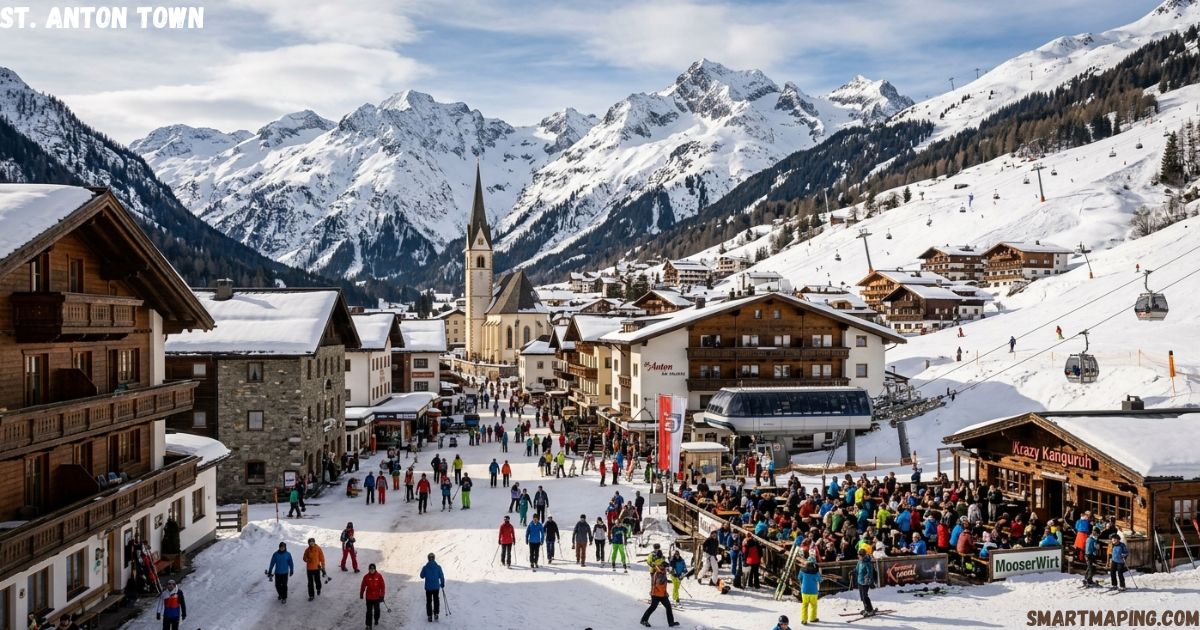
St. Anton Town (officially St. Anton am Arlberg) is a small Austrian town located in the Arlberg region of Austria, nestled deep within the Alps. Widely known as the cradle of Alpine skiing, it is one of the most famous ski resorts in the world, offering access to roughly 300km of lift-linked slopes shared with neighboring resorts like Lech and Zurs.
While it built its reputation on winter sports and its lively apres ski culture, St. Anton has also become a popular summer destination, drawing visitors for its scenic hiking routes through the surrounding mountains. Beyond the slopes and trails, the town is equally known for its buzzing mountain nightlife, making it a year-round destination that blends adventure, tradition, and Tyrolean charm.
St Anton Town A Historic Alpine Sanctuary
I still remember my first trip to this Austrian town, tucked deep in the Alps, where every corner tells a story from its long ski history. Locals proudly call St. Anton town the cradle of Alpine skiing, and once you stand in the valley surrounded by sharp mountain ridges, you understand why. The wintery terrain here is not just for show; the terrain shapes daily life, from how houses are built to how people plan their winter ski holiday. Even a short ski holiday in this Tyrolean ski village feels different from anywhere else in Austria, because the mountains seem to wrap around the town like a protective wall.
What surprised me most, though, was how much this resort offers outside the snowy months. During summer months, the same slopes that host skiers become home to hiking routes for visitors of every kind. Geli Häusl, who runs Geli Skiing, once told me that easy trails and low-level trails suit young children perfectly, while other paths bring a real physical challenge for stronger walkers. She grew up in Strengen am Arlberg, a peaceful neighbouring village, and she still believes this whole area deserves recognition as a genuine summer destination.
Evenings here have their own rhythm too. Any nightlife guide written for first-timers will tell you that the apres ski culture starts long before dinner, and the mountain nightlife builds fast once boots come off the slopes. The rhythm of nightlife moves through apres ski hotspots, spreads across après-ski terraces, and later shifts toward late bars and live music venues, where the dance floor stays busy well past midnight. For a quieter option, a St. Anton restaurant offers a slower evening away from the noise.
Premier Skiing Across the Arlberg Network
On the skiing side, this St. Anton am Arlberg area is now lift-linked to Lech and Zürs, forming a huge network across the Arlberg ski areas. Skiers can enjoy roughly 300km of marked runs and another 200km of open freeride routes, including plenty of intermediate ski slopes and advanced ski slopes for every ability. Among all the ski resorts in Austria, this one still hosts a proper opening festival, with live bands playing from 1st December through 1-3 December, setting the tone for the whole season across every set of slopes.
Geli’s top four hiking trails
On my own hike out of St. Christoph, I quickly learned that a short bus ride is all it takes to reach the start of the Berggeistweg. The path climbs fast at first, but soon opens onto wide meadows, where mountain goats and Haflinger horses graze calmly near the tree line. This route counts as medium difficulty, covers 9.3 miles, and takes about 6hr15m, climbing 2,625ft and dropping 2,493ft along the way. The route also passes near the Patteriol, one of the most imposing peaks in the whole region.
Further along, the trail leads to the cosy Kaltenberg Hut, a perfect spot to stop for goulash with spätzle, which locals also just call noodles with meat sauce. From there, the Paul-Bantlin-Weg carries walkers gently back down to St. Christoph am Arlberg, ready for the return bus ride. Anyone who prefers a gentler day should try the Two Gorges Trail instead, rated easy to moderate, running 5.3 miles in about 3h15m, with a climb and drop of 1,165ft. It follows the Rosanna gorge, links onto the WonderWalkingWay, and even includes stretches where you can walk barefoot.
Families often stop at the Sennhütte mountain hut for lunch, sharing a sweet Tyrolean pancake known as kaiserschmarren, before children run off to explore a treehouse nearby. Signs along the way share stories about the locals who once lived among these mountains, and small ladders and steps help hikers cross the Mühltobelweg Gorge, where several waterfalls tumble down beside the path.
Panoramic Hiking on the Alpenrosenweg Trail
For a longer, circular hike, the Alpenrosenweg is hard to beat. Named for the alpine rose bushes that bloom every May and July, it stretches 11.2 miles over 7h15m, gaining and losing 3,051ft. The path starts at the Rendlbahn cable-car, which only runs on Wednesdays and Thursdays, though hikers can also walk through forest and cross the Moosbach river into the Moostal Valley.
Along the ridge, views open across the Lechtal Alps and the Stanzertal Valley, past dairy cows brought up for summer grazing. At the Rendlalm hut, I refuelled on kaspressknödel mit sauerkraut, hearty cheese dumplings with sauerkraut, before following the Erzherzog-Eugen-Weg back to town one of the many interactive experiences Geli points travellers toward, along with the quiet herb gardens, the nearby river, and stories about how a village once survived on children, animals, and the grazing land around it.
St. Anton am Arlberg nightlife guide for first-timers
Nightlife in this part of Austria rarely waits for sunset. Once skiers finish their last run, still wearing ski boots, they head straight to apres ski bars that sit close to the slopes, ordering a drink with friends while the mountain views stretch out behind them. Within an hour, the mood shifts completely, and this ski resort feels less like a quiet town and more like one long nightlife circuit.
Tourism data backs up what any local will say: this remains one of the most visited ski destinations in the country, largely because of its après-ski culture. Terraces near the centre fill quickly, music starts almost on cue, and the whole village seems to join the same party scene at once. It is this fast transition from ski day to social night that gives the town its identity.
Not every visitor wants constant noise, though. Many prefer staying in quiet areas slightly above the action, choosing a calmer base such as the alpine-style accommodation at Hotel Die Arlbergerin. From there, guests still get easy access to the nightlife, but they also return each night to a genuinely peaceful place, which makes the whole holiday feel balanced rather than exhausting.
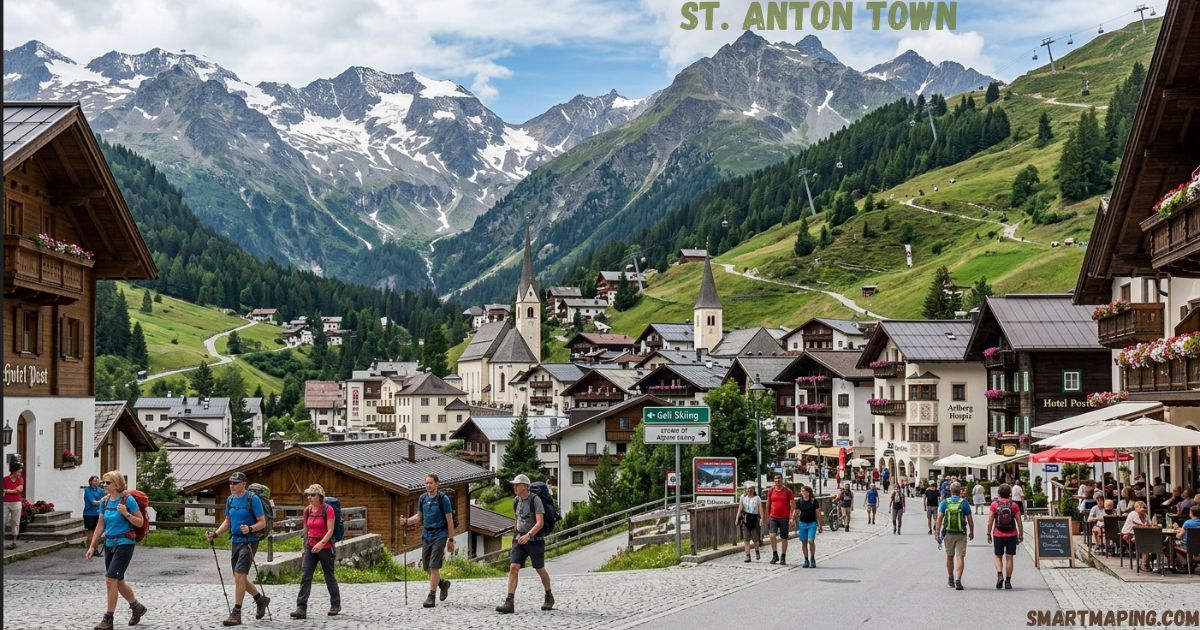
What makes nightlife in St. Anton different from other ski resorts
Compared with most Alpine resorts, this village does not wait until after dinner to come alive. There is no quiet transition from mountain to bar; instead, the rhythm builds while skiers are still riding down. Ski lifts close, and almost immediately the terraces fill with noise, movement, and rising energy. Locals often describe this as high energy from the very first hour, unlike the relaxed dining and quiet drinks you would expect in a typical mountain town.
Part of the reason lies in scale. The Ski Arlberg region counts among the largest interconnected ski areas in the country, stretching across 300 kilometres of pistes. That means huge crowds move toward the same base areas every single afternoon, and the slope-side bars fill almost instantly. Instead of one calm evening, the town moves through distinct stages: sunny terraces at mid-afternoon, dance floors and DJ sets by evening, and full village venues with live bands once night properly falls.
This pattern creates a distinct nightlife factor that separates the town from ordinary ski resorts. The crowd mix brings together international skiers and seasonal workers, all dressed in ski gear and boots, not the usual casual evening clothing seen at hotel guests-only resorts. Music scene here leans toward live bands and constant dancing rather than the soft background music typical of quieter Alpine resorts.
As the town’s tradition and long reputation for mountain bars shows, none of this happens by accident. The atmosphere early evening grows naturally as village lights switch on, carrying the social scene from outdoor terraces into indoor venues. There is rarely a fixed plan; the whole thing feels spontaneous and deeply social, and it rarely resembles a quiet mountain village.
By the time late nightlife takes over, bars and clubs stay open into the early hours, long after after dinner hours would have closed things elsewhere. That final transition from apres ski bars near the lifts to packed town bars in the centre is exactly what makes evenings among visitors and differences compared with other ski resorts so easy to notice, right down to the dinner and drink habits that shape the town’s whole nightlife environment and its town’s long history of doing things its own way.
Why Ski St. Anton am Arlberg?
Why ski St. Anton am Arlberg? Ask any local why people travel here every year, and the answers rarely match. Most come for the challenge, others for the craic, and honestly, both reasons are fair. If you ever find yourself asking that same question, it helps to look at the six reasons locals give for choosing to ski St. Anton am Arlberg above almost anywhere else in winter.
FAQs
What makes St Anton town a top destination for winter sports?
St Anton town is world-renowned as the cradle of alpine skiing. Located in the Arlberg region of Austria, it offers over 300 kilometers of connected ski slopes, extensive off-piste terrain, and a vibrant après-ski culture that attracts skiers and snowboarders from around the globe.
What is the best time of year to visit the Arlberg region?
The peak winter season runs from December through April, offering optimal snow conditions for skiing and snowboarding. For hiking, mountain biking, and milder weather, the summer months from June to September are ideal.
How do visitors typically get there from major airports?
The closest major international airports are Innsbruck (approx. 1 hour away), Zurich (approx. 2 hours away), and Munich (approx. 3 hours away). Travelers can easily reach the region via direct train connections, airport shuttle services, or rental cars.
Are there activities available for non-skiers during the winter?
Yes. Non-skiers can enjoy winter hiking trails, toboggan runs, ice skating, snowshoeing, wellness centers, and a variety of dining and shopping options throughout the valley.
Is St Anton town suitable for summer holidays and family travel?
Yes, St Anton town transitions into an excellent summer destination featuring hundreds of kilometers of marked hiking paths, e-biking routes, cable cars, family-friendly adventure parks, and relaxing outdoor wellness facilities.