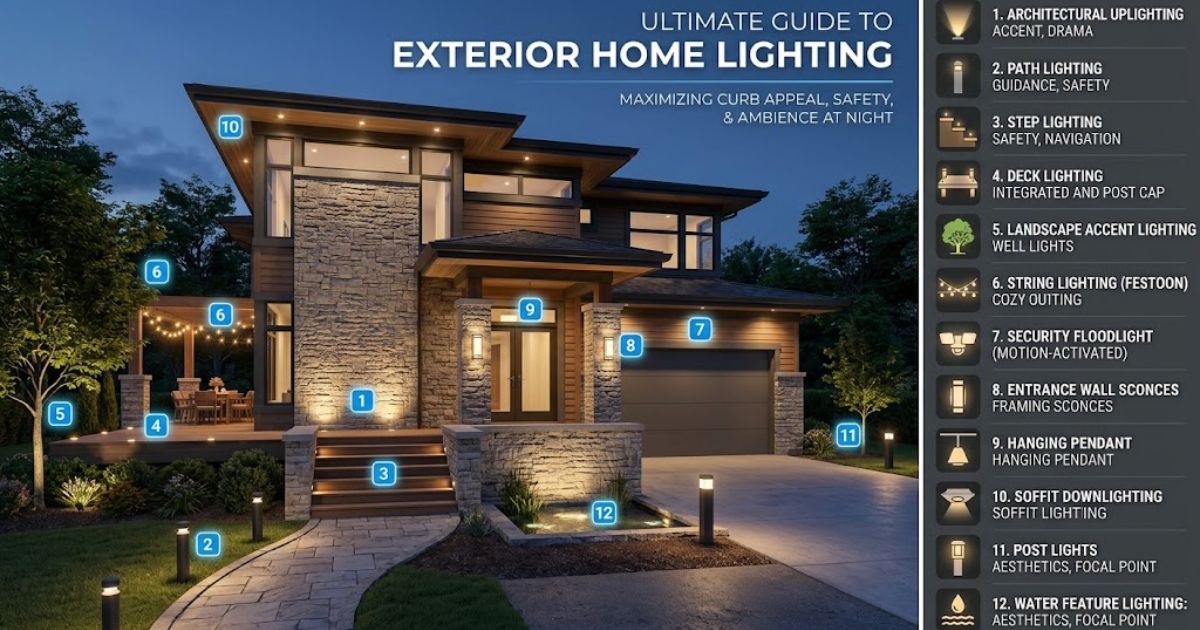
I take pride in the appearance of my home, and I enjoy exterior home lighting most when the sun goes down, so I treat exterior lighting as part of the house, not an extra. Good outdoor lighting lifts curb appeal, helps the front of the house stand out on the block at night time, and lets the front yard make a statement.
Exterior Home Lighting
With proper planning, simple lighting techniques, and five great ideas, you can build a grand entrance, light your walkways and entrances, add dramatic looks to the garden, and create a secure environment where intruders think twice. My yard now supports safety, relaxing, and entertaining at once, and the beauty and style show every evening, starting with one bright entrance.
Driveway and Walkway/Pathway Lighting
When I plan exterior home lighting for the approach to my house, I install pathway lights 4 ft to 6 ft apart along each walkway, close enough that they spill light onto the planter bed and create an inviting walkway to the front door.
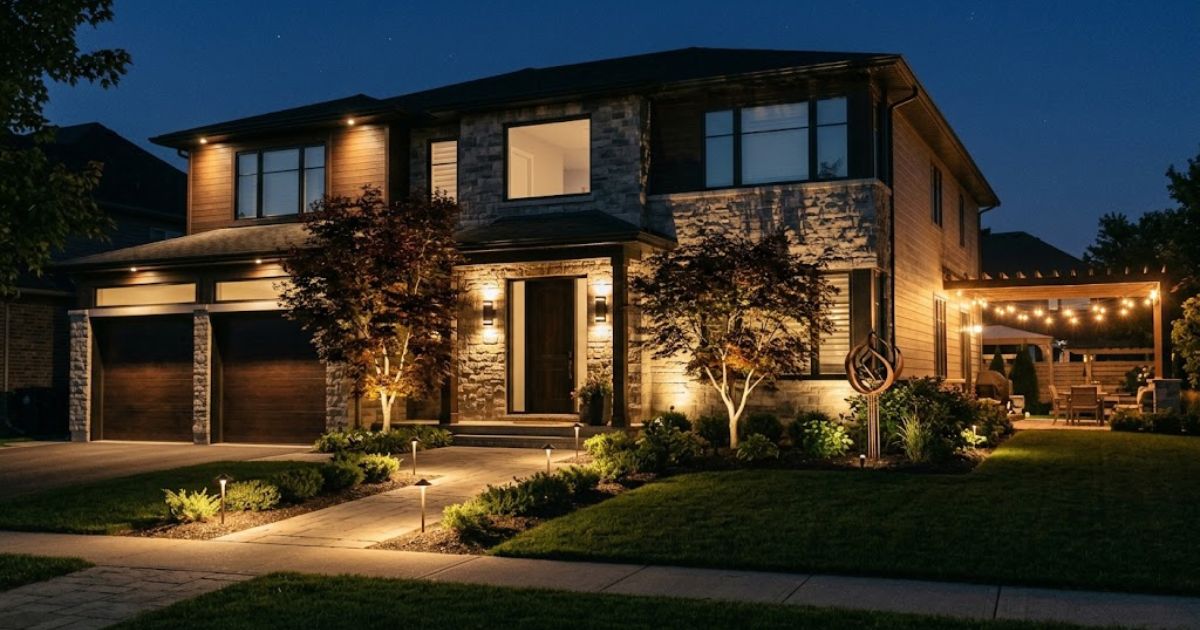
I keep every driveway, the paths, and the steps illuminated so guests avoid trip hazards, and this safety also helps me welcome guests and connects spaces visually. Post lights with an open modern lantern design and clear glass panels line my drive, a double box wall light sets a modern tone, the black and brass finishes give a mixed metal look with real style, and solar powered LED path lights guide people to the door.
Entrance and Porch Lighting
In exterior home lighting, porch lighting starts with a bright light that will mark the entrance, so I chose a black frame wall light with an open glass design that matches my driveway lighting.
I light all doors and entrances with entry lights, eave lights, and spots, because they give security, scare off intruders, and add safety. Even light posts do double duty on the front of the house, since they make a statement and bring out the home’s beauty.
Deck and Patio Lighting
Exterior home lighting also works well on my deck and patio, where I use low voltage, space saving accent lights on posts, railings, and steps, with light focused downward for better visibility and safety.
Recessed deck lights that flush mount trace the perimeter, post lights at entrances give 360 degrees of glow, and rope lights or outdoor rated holiday lights stay up year round for ambiance and atmosphere. At the back of the house, an LED design helps me wash with light the exterior walls to show off the architectural form, and in the backyard I pick white light or color for a personal touch, just as I do from the driveway to the front of the home.
Landscape and Garden Lighting
In my garden and front yard, I use spotlights to bring out the detail in interesting trees, shrubs, and sculptures. I place fixtures in front of them so shadows fall on walls and other flat surfaces, and accent lights at the base of a tree or in-ground give a dramatic highlight. Down lighting from the branches of trees copies moonlight, and I now plan this step during landscaping.
Security Lighting
Exterior home lighting should do more than look good, because decorative lighting looks nice, but security and safety need more, so I put a security floodlight on the side of the house. Motion sensor lights, timed lights, and floodlights together give the best coverage, and some designs offer motion activation and dusk to dawn modes. This mix of outdoor lighting gives me peace of mind every night.
String Light Accents
For an area away from main house with no outlet nearby, I skip the electrical outlet and hang solar powered lights in my vineyard-style corner. These solar strings give a romantic accent without any wiring. They glow softly, and I enjoy sitting there after dinner.
Planning Your Outdoor Lighting
The planning process begins with sketching my yard and ideas, ideally during landscaping, though you can add lights later. At a minimum, I light steps and dark areas for safety. Before I buy anything, I test with a flashlight or work light, and I note any ambient light from other sources.
Choosing Types of Lighting
I pick standard voltage for brighter zones and low voltage for mood and accents. Lights come in many shapes and sizes, so I mix suspended, mounted, and under eaves fixtures with ones on poles and in ground. I do my research first, then install what fits my home best.
Avoiding Glare and Overdoing It
I always check that glare never bothers passersby or my neighbors. I never overdo it, because less is more. A few well-placed lights beat a yard full of bulbs.
Conclusion
Proper lighting helps you maximize your home and yard after dark, and well-planned exterior home lighting lets you show it off, literally.
FAQs
What is the best type of exterior home lighting for security?
A mix works best. Motion sensor lights, timed lights, and floodlights together give the best coverage. Motion lights surprise intruders, timed lights make the house look lived in, and a security floodlight on the side of the house covers dark corners. Many designs also offer dusk to dawn modes, so you never have to switch them on by hand.
How far apart should I place pathway lights?
Place pathway lights about 4 ft to 6 ft apart. Keep them close enough to the walkway to light the way, and let them spill light onto the planter bed too. This keeps the steps and paths illuminated, so guests avoid trip hazards.
Should I choose low voltage, standard voltage, or solar lights?
Each one has its own job. Standard voltage gives brighter light for busy areas, while low voltage suits mood and accents. Solar powered lights work well in an area away from main house where there is no electrical outlet. Many people mix all three to get both safety and a romantic accent.
How can I light my trees and garden without overdoing it?
Use spotlights or accent lights at the base of a tree to create a dramatic highlight. You can also place down lighting in the branches to copy moonlight. Light only a few interesting trees, shrubs, or sculptures, and always check for glare that could bother neighbors or passersby. Remember, less is more.
When is the best time to install exterior home lighting?
The best time is during landscaping, because wiring and fixtures go in more easily. However, you can install lights at any time. Start with the planning process by sketching your yard, then test your ideas at night with a flashlight or work light before you buy anything.
Which areas of my home should I light first?
Start with safety. Light the steps, dark areas, driveway, front door, and all doors and entrances. Then add porch lighting with a bright light to mark the entrance. After that, move to the deck, patio, and garden to add ambiance and style.