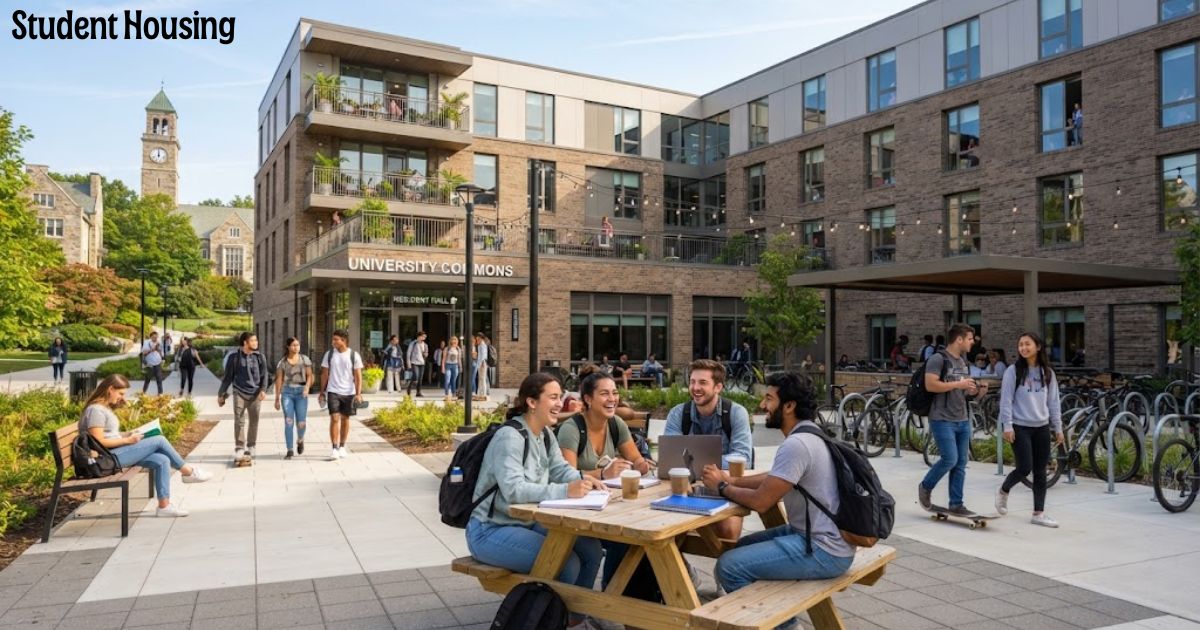
What is student housing investing Nashville buyers ask most often? It means owning purpose-built student housing or a rental house and leasing rooms to college students near a campus. This guide shows how student housing investment works in Music City, with numbers you can check.
What Is Student Housing, Exactly?
This niche covers rental property built or used mainly by people attending college. Off-campus student housing sits outside school grounds, while on-campus housing belongs to the university. Most private investors work on the off-campus side.
Universities rarely own enough beds, so dormitory capacity often trails enrollment. That gap creates demand for any college rental property in a college town. Nashville works as a university market for both student rentals and student-focused rentals.
Why Do Investors Look at Nashville for This?
Nashville student housing serves several large campuses inside one fast-growing city. A real estate investor can treat it as a separate asset class with its own rules. Student housing investing works here when location, enrollment, and price line up.
The Nashville real estate market has grown quickly, and Nashville multifamily buyers fight over good sites. The local student housing market adds school-driven demand on top of that. Some owners build a student housing portfolio, and a search for student housing Nashville TN turns up plenty of options.
How Does Leasing by the Bed Work?
Each bedroom gets its own lease and its own rent check. Under by-the-bed leasing, one four-bedroom apartment brings in four payments instead of one. The same walls earn more.
Investors track rent per bed and bed count, not only units. A 4BR/4BA format gives each roommate a private bathroom, and renters pay extra for it. Any shared apartment or shared housing deal needs a smart unit configuration and unit mix, and the rent roll should show rent roll per square foot.
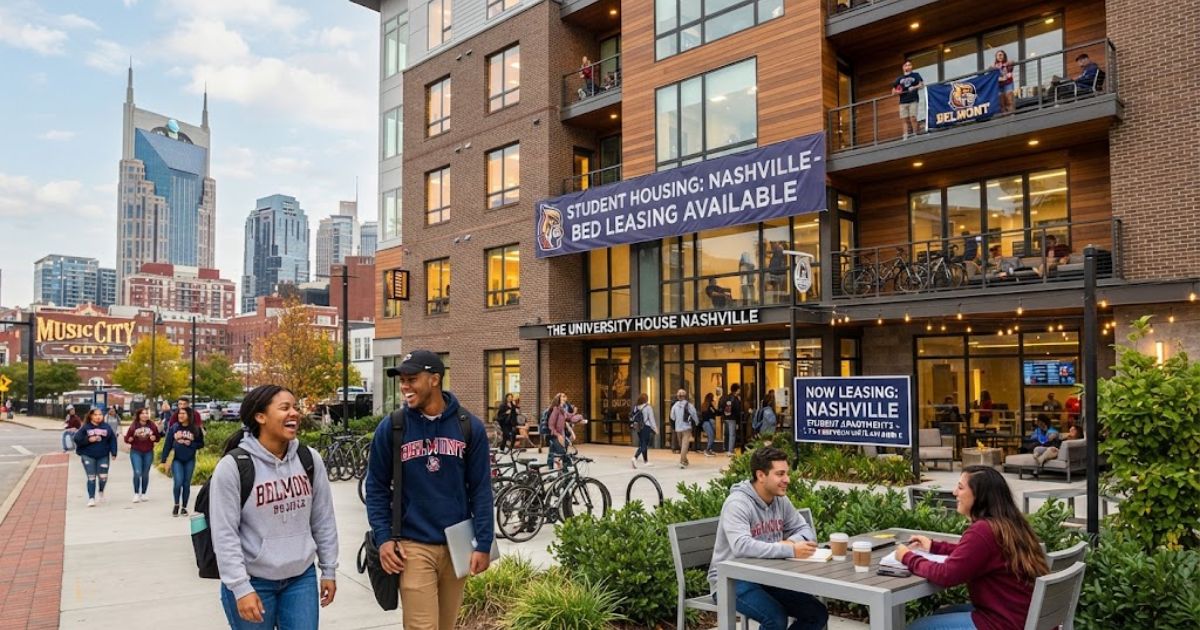
How Does the School Year Change Leasing?
Leases follow the academic calendar, so most tenants move in and out in the same weeks. That academic cycle creates one big leasing season. Owners plan the year around it.
Most beds run on an annual lease cycle, though shorter leasing cycles let owners reprice rent sooner. A flexible lease term also helps fill odd gaps. Experienced owners map a marketing calendar early and watch seasonality closely.
What Is Pre-Leasing and Why Does It Matter?
Pre-leasing means signing tenants months before they move in. Strong pre-lease velocity shows real demand, while a slow pace signals trouble. DealDraft says new Nashville buildings averaged 87% pre-leased by May 1.
Lease-up is the stretch between opening day and full occupancy. Owners track each month’s pre-lease percentage, and good buildings hit pre-leasing by spring goals. Strong renewal rates and low tenant turnover cut costs.
Who Rents These Beds, and Who Guarantees the Lease?
Mostly young adults rent these beds, and a parent usually backs the lease. A parental guarantee shifts credit risk from a renter with little history to an adult with steady income. Many operators require a parent co-sign, and the guarantor pays if the tenant cannot.
The tenant base mixes graduate students, undergraduate students, and underclassmen, plus young professionals and interns near downtown. Predictable renter demographics and a deep renter pool create built-in demand. Owners still run careful tenant screening, host extra property showings, review heavy rental applications, and watch collection risk if a guarantee fails.
Which Nashville Schools and Neighborhoods Matter Most?
Vanderbilt University anchors the market, and DealDraft puts its enrollment near 13,500 students. Belmont University and Tennessee State University (TSU) add demand across town. MTSU pulls renters in Murfreesboro, southeast of downtown.
Investors split the city into Nashville submarkets and run submarket analysis for each one. Areas include Vanderbilt-adjacent blocks, the Music Row corridor, Midtown, and the TSU corridor, while transit upgrades along Charlotte Avenue may help outlying sites. The Belmont music program and wider higher education sector keep interest high, and Middle Tennessee buyers often cross Rutherford County lines.
Why Does Distance to Campus Matter So Much?
Distance to campus drives rent and lease-up speed more than most factors. Proximity to campus wins because students hate commuting, and walkable proximity beats any shuttle. DealDraft says properties within half a mile of Vanderbilt reach 95%-plus pre-lease rates.
A short walking distance to class lets owners charge a premium, and the walkable radius around a school stays small. Sites on the campus edge lease first, while farther buildings often need shuttle service. Transit improvements can narrow that gap, but they rarely erase it.
What Is a Good Cap Rate for This Niche?
A cap rate divides yearly net operating income by the purchase price. DealDraft lists Nashville ranges from about 5.0% to 6.5%, with core Vanderbilt deals at the low end. Lower numbers mean buyers pay more for each dollar of income.
Some people say capitalization rate, and cap rate compression happens when many buyers chase limited supply. Buyers also compare price per bed, which DealDraft puts near $118,000 for stabilized assets. That is why what is student housing investing Nashville often becomes a pricing question first.
What Do Today’s Nashville Numbers Say?
DealDraft reports a market-wide vacancy rate of 4.2% in Fall 2025 and rents up 5.8% year over year. Tight vacancy points to a strong occupancy rate. Verify these figures yourself before you buy.
Sales hit $340 million in 2025, and DealDraft compares that transaction volume with $275 million the year before. Strong absorption of new buildings supports rent growth, and premium blocks near Vanderbilt earn a rent premium of $50 to $75 per bed. Check the year-over-year rent trend every fall.
How Much Money Can It Make?
Beds often earn more per square foot than a standard rental, because roommates split the cost. That lifts cash flow, and the best owners enjoy higher cash flow with consistent income. Still, no return is guaranteed.
Add rental income from every bed into one income stream, then measure return on investment after costs. Writers call this college housing ROI, and secondary-location buyers in DealDraft’s guide target unlevered returns above 7%. Run your own numbers first.
What Does It Cost to Run a Student Property?
Costs run higher than in a normal rental, because more people share the space. Operating expenses include staff, repairs, and furniture. A clear operating expense breakdown keeps surprises small.
Constant wear and tear pushes up maintenance costs and repair expenses, while turnover costs hit every bed each summer. Many buildings also pay for 24/7 staffing, furniture replacement, technology infrastructure, and resident programming. Good property management and sharp asset management control those bills, and a firm leasing strategy limits empty beds.
Which Amenities and Upgrades Help Rents?
Tenants compare features, so an amenity package can lift or cap rent. Popular items include a resort-style pool, study lounges, and a fitness center. Parking matters too, so structured parking and a healthy parking ratio win points.
Students expect furnished units, reliable Wi-Fi, and high-speed internet for streaming. Small extras like bike racks, extra storage, and study nooks cost little. Durable flooring and easy-to-clean surfaces support quick turnovers, while a high finish level helps buildings compete.
Is This More Like a Hotel Than an Apartment Building?
Often, yes, since a hospitality-style operating model fits this business. Tenants turn over together, staff stay on call, and marketing never stops. Comparing it with conventional multifamily and traditional rentals without adjusting for that difference misleads buyers.
Owners improve older assets through a value-add plan, from a value-add renovation to full repositioning. Property vintage matters, since older buildings often need upgrades before they compete. A single-family rental near campus can follow the same playbook.
What Are the Biggest Risks?
New supply is the top danger, because a newer building closer to campus can steal tenants. DealDraft expects 1,800 new beds in 2026 after 2,400 in 2025. Watch the supply pipeline and every competing product nearby.
A school’s on-campus housing expansion and its university-owned beds can also shrink demand, so run a competitive set analysis. Any change in university housing policy adds more market risk. Shifts in enrollment trends, enrollment projections, and university enrollment deserve yearly checks, and a capture rate study shows your share of demand.
How Do Owners Handle Empty Summers?
Many owners plan for summer vacancy from day one, because students leave in May. A solid summer occupancy strategy fills beds with other renters. That plan matters since the concentrated leasing season leaves little room for error.
Owners chase non-student revenue through internship housing, short-term rental income, and conference and event housing. The growing Nashville corporate hub sends summer interns looking for beds. DealDraft also flags climate resilience in new approvals.
FAQs
Who Buys Student Properties in Nashville?
Big student housing REITs target portfolios above $50 million, according to DealDraft. Private equity hunts upgrade deals, while regional multifamily operators buy smaller assets. National operators also close portfolio deals here.
Institutional investors chase scale, and family offices prefer single-asset deals. Smaller owners join through syndication or a Delaware Statutory Trust (DST) for passive ownership. Sellers publish an offering memorandum, and buyers complete careful underwriting before any acquisition.
How Do Buyers Finance a Purchase?
Buyers combine cash with debt financing. Lender underwriting often favors parent-backed leases, according to 1031 Exchange of Nashville. A strong guarantee structure helps any student housing acquisition Nashville buyers pursue.
Lenders also study Tennessee population growth, because more residents mean more college-age renters. They like urban infill sites, too. Strong long-term property value and smart portfolio diversification make approval easier.
Can I Use a 1031 Exchange?
Yes, a 1031 exchange lets investors defer capital gains tax when they swap into like-kind real estate. Both new buildings and student-oriented rental houses qualify as 1031 replacement property, according to 1031 Exchange of Nashville. A qualified intermediary must hold the exchange proceeds.
Investors need replacement property identification within 45 days of the sale, and a reverse exchange flips the order of the swap. Deadlines run strict, so plan early. Ask a tax professional first.
What Rules Apply in Nashville?
Nashville adds local rules that affect every deal. DealDraft mentions student housing overlay districts and parking requirements. Confirm zoning compliance before you buy.
The regulatory context shifts, so ask about pending changes. Good ties with neighborhood associations prevent fights later. Do this homework early.
So, Is Student Housing Worth It?
It can be, if you buy near campus and budget for heavy turnover. Beds earn more per square foot, but empty summers, competition, and costs can cut profit. Treat it as a hands-on business, and check every number twice.
Start small, compare several campuses, and talk to local operators first. Cheap mistakes teach faster than expensive ones. Now you can answer what is student housing investing Nashville with real numbers and clear steps.