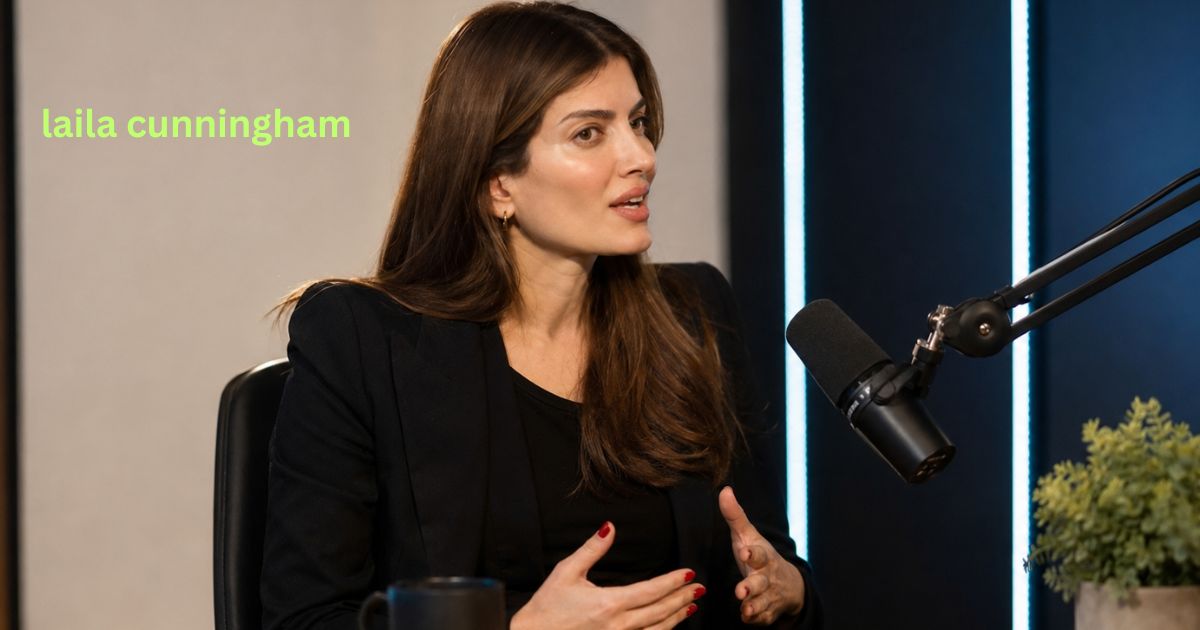
Few political trajectories in Westminster have raised as many eyebrows as Laila Cunningham’s. Long before she found herself under the media spotlight, she spent years as a Crown Prosecution Service lawyer, presenting criminal cases in courtrooms across the country. That legal background sharp, argumentative, and rooted in the justice system now shapes the way she operates on the political stage, making her rise one of the more unexpected storylines in recent British politics.Then, in June 2025, she left the Conservative Party and joined Reform UK, becoming a councillor in a London borough almost overnight.
That single defection turned her into a figurehead for a movement that claims to speak for ordinary people rather than the tired old guard of Labour and the Tories. She built her name by challenging the establishment on crime, immigration, and free speech, three subjects that career politicians rarely answer honestly. Commentators quickly placed her among the sharpest new figures on the British right, and she has said the connection first formed back at an event in Preston, months before any of this attention arrived.
By January 2026, Nigel Farage had chosen her to lead the campaigning push for the London Mayoralty race in 2028, a decision that placed her firmly at the centre of the Reform Party’s ambitions for the capital, and gave Reform a genuine face for the city. What stands out most, watching interview after interview, is how little she softens her opinions for a wider audience. She speaks the same way whether she is on stage at a rally or sitting across from a local reporter, and that consistency is rare enough that it tends to stick in people’s minds long after the clip ends.
Ask her about Prime Minister’s Question Time and she gives a blunt answer, not a rehearsed one. She compared a departing leader’s send-off to watching someone get fired and applauded in the same breath, joking that the sitting Prime Minister deserved a cardboard box and a pot plant rather than praise from Kemi Badenoch. She argues he never won a genuine landslide victory, and she believes that if Reform had spent another 12 months organising itself, the result might have produced a coalition rather than a single winner.
She calls PMQs pure theater, and she insists career politicians only crave attention because they live for the podcast circuit and a slot on Sky TV, unlike figures such as Boris or Donald Trump, who she says never begged for a camera. She has no patience for empty policies, and she names Rachel Reeves, the Chancellor of the Exchequer, alongside Keir Starmer, for lacking any real charisma, especially after a viral clip at a petrol station where a man in high visibility trousers challenged Reeves directly.
She also questioned why the media mocked one departing MP on Twitter for seeking a ceremonial Bailiff or Steward title on his way to campaign in Clacton, while another figure from Makerfield, Josh Simmons, received exactly the same ceremonial treatment without a single complaint across Facebook or the 16 news outlets that covered it. She points out that Jo Swinson and Ann Widdecombe never received so much as a minute’s silence, which she reads as proof that the press only turns hostile when the target is connected to Reform.
Her frustration extends into the machinery of government itself. She warns that whoever wins power next faces a hostile civil service built from 81,000 people working across Whitehall, all protected by pensions that make passing new legislation an uphill fight. She insists this is not a one-man show built around Nigel Farage, but a genuine movement carrying thousands of people, people who watched him take criticism for 30 years while every journalist demands to know how a fresh mandate could ever survive the House of Lords.
To her, that outcome simply describes democracy working as intended, and she rejects the idea that unelected politicians should stand in its way. She also dismisses claims that a rival candidate campaigning in a suit covered in Union flags represents genuine nationalist politics or real civic nationalism, insisting he is actually a left-wing agitator spreading false claims that Reform wants to privatise the NHS. In her view, outsourced food, outsourced catering, outsourced cleaning, outsourced hospital beds, private hospitals, and surgeons brought back on contract already prove the service has been privatised for years.
Laila Cunningham on the NHS and Her Family
laila cunningham Health care sits close to home for her, not somewhere in theory. Her husband is American, and she admits watching him worry about medical costs whenever he falls ill back home. Inside her own family, her sister worked as a retired consultant, her nephew works as a doctor, and her niece also works in medicine, so she speaks about preventative measures with genuine weight behind every word.
She worries about the epidemic of breast cancer cases when doctors delay a mammogram until age 50, and a colonoscopy follows the same late timeline, while rich people who listen to podcasts happily pay for full-body MRI scans every year to catch problems early. A friend of hers recently paid privately for a procedure the NHS refused to fund, and she recovered on her feet faster than expected.
She backs a mixed system, one where people with money can pay for extra health care while people who cannot afford it still receive proper treatment, and she remains convinced that lockdown decisions taken across the Western world during the virus years, backed jointly by the Labour Party and the Conservatives, badly failed the public. Prevention, in her mind, should never stay locked behind a private clinic door reserved for people who can already afford the best of everything; she wants the same early screening habits that wealthy families take for granted rolled out much further down the income scale.
One story explains her anger better than any statistic. Doctors first found a cancerous tumor in her sister, then removed a separate non-aggressive tumor through surgery in December, just before lockdown began. By February and March, new pain appeared, yet doctors delayed a follow-up scan, and during those wasted months, growth that should have taken decades instead reached stage four with aggressive spread into her bones. A broken bone then placed her in a ward, where she caught COVID, and on what medics call the fourth or fifth day, her condition collapsed and staff rushed her into intensive care.
Family members put on hazmat suits and masks, and sat through four occasions over two or three months where the hospital warned she was close to death, only for another NHS consultant in the family to check her lungs and insist she was not. Staff at what she calls Charing Cross Hospital repeatedly pushed the family to sign a DNR, and even withheld proper oxygen despite a dangerously fast heart rate that felt like constant sprinting.
The family kept a zoom call running 24 hours a day just to watch over her care. She survived COVID and responded well to chemo, but her weakened resistance eventually caught up with her, and she passed away, leaving a grief her sister still carries. Having paid taxes into the system her whole life, and having watched relatives get denied a CPAP machine and basic suffering-reducing care, she says that moment showed her something in the system had broken.
Laila Cunningham on Money and Government Contracts
That anger carries straight into how she discusses staffing and spending. She points out that around 15,000 people across Britain, British people trained anywhere from Scotland to England, lose out on NHS frontline jobs every year because managers prefer overseas staff, seen simply as cheaper staff than people trained at home. She contrasts that situation with the outrage over Nigel Farage’s 5 million, insisting nobody handed out a single government contract because of it, unlike money that moves quietly through Parliament.
She highlights that Wes Streeting reportedly received close to £10,000 a month after leaving his post as health minister, paid by a company linked to NHS staffing, a claim she says anyone can check on Google. She also raises a donor in Leeds, widely reported as Frank Hester, who gave £20 million to the Tory party and later received both an NHS contract and a prison contract worth £400 million, with an estimated £150 million profit built in, far from any genuine cost-effective contract.
She argues that money like this funds private jets, lavish lifestyles, helicopters, and super yachts, all completely legal, while £5 million quid given without any government contracts attached becomes the real scandal in the eyes of her 700,000 followers. She wants a proper look at the tax system, at profit margins, and at how ordinary taxpayer money gets fleeced through cash for influence and cash for contracts, pointing to £138 million handed to donors and billions more elsewhere that rarely reach the front page.
She wants an itinerary published by the press, a full investigation from outlets like The Times, especially since the health secretary overseeing the largest NHS reorganization in a generation reportedly accepted £372,000 from companies and individuals tied to the private health care sector, on top of that £10,000 pounds a month. She names journalist Gabriel Pogrund directly and asks him to dig deeper, while also naming a housing minister who avoided paying tax on a second home, and a cancelled midwife bursary that she blames for struggling maternity units.
She wants transparency across every set of NHS contracts, not just the ones that make headlines. With close to 90,000 subscribers on YouTube, 380,000 followers on Facebook, and 250,000 on Twitter, she has built a genuine platform for putting these numbers directly in front of the public.
Drink Tank with Laila Cunningham
The organisers scheduled the Drink Tank event featuring Laila Cunningham for Monday, 13th July 2026, giving supporters a chance to hear directly from the Reform candidate standing in the London mayoral election. Before this campaign, she had already won a seat on the Westminster City Council back in 2022, and that earlier win became elected proof that her local reputation predated any national attention.
Her earlier career as a Crown Prosecution Service prosecutor gave her a grounding in law that still shapes how she talks about crime and accountability today. At the event, she centred her talk on Reforming London, discussing practical ideas rather than vague slogans, and she drew on her background as a former prosecutor to explain how she believes the capital should actually run. Anyone tracking Laila Cunningham’s rise sees this event as a small but telling example of how she earns trust: face to face, one room at a time, rather than through soundbites alone.
Conclusion Laila Cunningham
Whatever people make of her politics, Laila Cunningham has clearly earned attention through consistency rather than luck. She built her name inside a courtroom, moved into local government, and now stands as one of the sharpest voices heading into the next London mayoral race. Her willingness to name names, question spending, and share painful family history instead of hiding behind talking points sets her apart from most politicians today, and that honesty explains why so many people keep watching what Laila Cunningham says next.
Supporters and critics may argue over her conclusions, but few can accuse her of dodging a question, and that alone gives her campaign a different texture from the usual scripted run-up to a mayoral race. As London edges closer to voting, her mix of courtroom discipline and blunt public speaking looks set to keep shaping the conversation right through to polling day.
Frequently Asked Questions About Laila Cunningham
Who is Laila Cunningham?
Laila Cunningham is a person who has attracted online interest, with searches commonly focusing on her family, age, background, and personal life.
Who is Laila Cunningham’s husband?
Information about Laila Cunningham’s husband is one of the commonly searched topics. Details should be based on reliable and publicly available sources.
Does Laila Cunningham have children?
Yes, searches about Laila Cunningham frequently mention that she has seven children.
What is Laila Cunningham’s ethnicity?
Laila Cunningham’s ethnicity is another topic people search for online. Reliable biographical sources should be used when discussing her ethnic background.
Is Laila Cunningham on Wikipedia?
People often search for a Wikipedia page about Laila Cunningham. Whether an official Wikipedia biography exists should be confirmed through Wikipedia directly.
How old is Laila Cunningham?
Laila Cunningham’s age is a commonly searched question. Her exact age should only be stated when supported by a reliable public source.
Was Laila Cunningham married before?
Searches also include the phrase “Laila Cunningham first husband,” suggesting interest in whether she was previously married. Any information about a previous marriage should be verified through trustworthy sources.
Is Laila Cunningham young?
Searches for “Laila Cunningham young” indicate interest in her earlier life and appearance. Information about her younger years should be based on publicly documented sources.
What is Laila Cunningham’s net worth?
Laila Cunningham’s net worth is another popular search query. Unless she has publicly disclosed her finances, online net-worth estimates should be treated as unverified.
Why are people searching for Laila Cunningham?
Interest in Laila Cunningham appears to focus mainly on her family life, husband, children, age, ethnicity, background, and financial information.