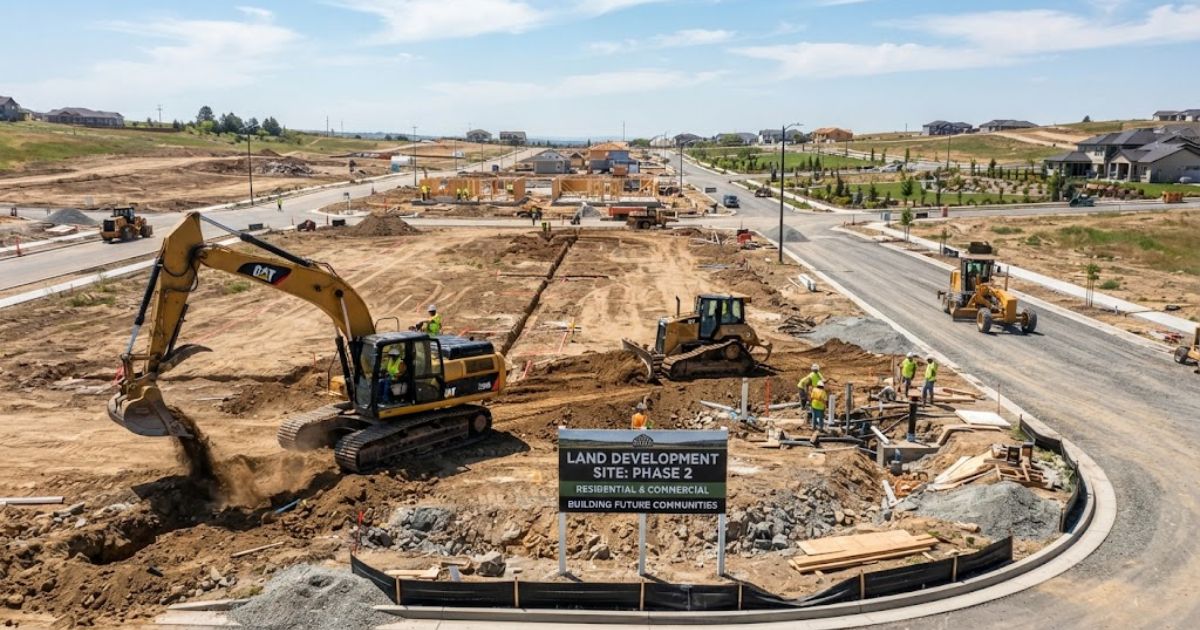
How does land development work Tampa for a first-time buyer or landowner? A developer turns raw land into sites where people can build, live, and work, using land planning, zoning approval, and civil engineering. This guide explains how land development Florida projects move from undeveloped land to finished neighborhoods.
What Is Land Development, and Who Does It?
Land development means preparing a property for homes, shops, or factories by adding roads, utilities, and drainage. Owners, engineers, planners, and city staff all play a part in the work. Together, they handle site development from the first sketch to the final inspection.
Think of it as the middle step between owning dirt and selling a home. A real estate development project can be a ten-lot subdivision or a master-planned community with thousands of homes. Tampa Bay development also includes infill development, where builders fill empty lots inside existing neighborhoods.
What Is a Pre-Feasibility Study and Why Run One?
A pre-feasibility study is a quick, low-cost check that shows whether a site deserves deeper work. It weighs the development potential of the land against likely costs and rules. Because it costs far less than a full feasibility study, you can drop a weak site early.
The check starts with a site assessment that lists site constraints such as wetlands, flood zones, and weak roads and access. Next, a short market analysis shows who will buy or rent the finished homes. Then you test the highest and best use and build a rough pro forma to see whether the numbers work.
What Should I Check Before Buying Land?
Run due diligence before land acquisition: confirm ownership, property boundaries, access, and allowed uses. Add an environmental assessment and a cost estimate for roads and utilities. Put those checks inside your purchase contract as deadlines, so you can walk away if the answers look bad.
A title search shows liens and easements, and a Phase I environmental site assessment looks for past pollution on the property. Smart buyers also write down the project scope, project budget, and development timeline so financial feasibility stays clear. A short risk assessment and a target return on investment then guide the final site selection.
How Do Future Land Use and Local Rules Work Together?
Future Land Use sets the broad category for a property, such as residential, commercial, industrial, or mixed-use. Zoning regulations then add the details, including allowed uses, building placement, and height. Both tools start from the Comprehensive Plan that each city or county adopts.
Planners show each land use designation on the Future Land Use Map (FLUM), and the Future Land Use categories also cover public lands and conservation areas. Every property also carries a zoning classification that appears on the zoning map and in the land development code. Under Hillsborough County land development rules, each jurisdiction keeps its own code, and the city publishes the Tampa zoning code as Chapter 27 of its city code.
What Does Entitlement Mean, and Who Approves It?
Entitlement is the legal permission to build a specific project on a specific site. You earn entitlement approvals through zoning review, and sometimes through rezoning or a plan amendment. Elected officials make the final local government approval, usually after the Planning Commission gives advice.
Owners who need flexibility often ask for a variance, a special use permit, or a planned development (PD) that fits the site better. Staff checks zoning compliance and land use compatibility before the case reaches a public hearing. After the vote, the city issues a development order, and the whole approval process can take several months.
What Is a Site Plan, and Why Does It Matter?
A site plan is a scaled drawing that shows where buildings, driveways, parking, and open space will go. Designers start with a conceptual site plan, then refine that concept plan as engineers and city staff add comments. A clear drawing saves money because it exposes problems before anyone moves dirt.
During site plan review, staff measure setbacks, building height limits, density, and lot coverage against the code. A mixed-use development adds extra checks because shops, offices, and apartments share one parcel. Always compare your drawing with the land use plans for the area, since staff send unmatched plans back.
What Do Surveyors and Soil Engineers Do on a Site?
Surveying measures the land, and geotechnical investigation tests the ground beneath it. A boundary survey marks the legal edges, while a topographic survey maps hills, dips, trees, and existing structures. Both give designers the facts they need before they draw anything.
Much of the Tampa area has sandy soil and a shallow water table, so soil testing matters more than many buyers expect. Geotechnical engineering teams drill borings and write a geotechnical soil report that guides foundations and pond design. Florida licensed engineers then use the site’s topography to plan where water will flow.
How Do Engineers Control Stormwater on a Site?
Engineers use site grading and drainage design to move rain away from buildings and into ponds, swales, or pipes. Stormwater management matters because Tampa’s wet season runs roughly from June through September. Designers add stormwater retention ponds that hold runoff and release it slowly.
When people ask how does land development work Tampa, the first answer is usually water control. Engineers map each floodplain, write grading plans, and add erosion control such as silt fences during construction. Many projects also use low-impact development so rain soaks into the ground where it falls.
How Do Engineers Design the Roads and Pipes?
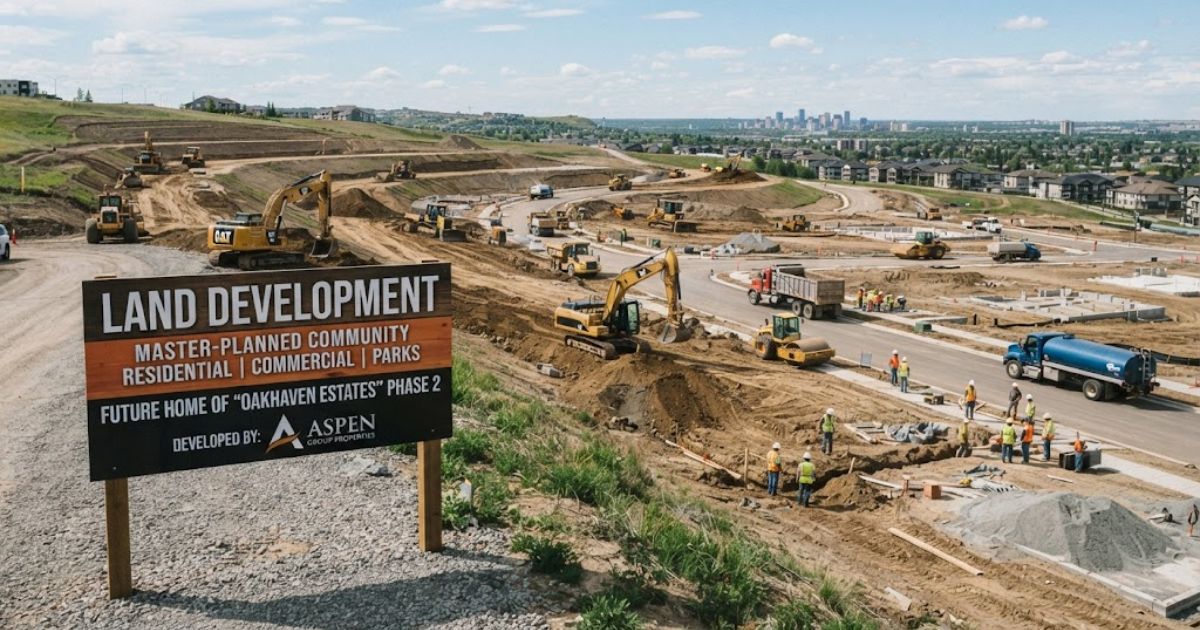
Civil design turns the approved plan into detailed layouts for streets, water and sewer lines, power, and drainage. Engineers use utility coordination to match each pipe and cable with the provider that will own it. Every sheet goes into construction drawings that crews can build from.
Utility plans show every connection, and a traffic study estimates the transportation impact on nearby streets. Florida’s concurrency rule ties approval to available services, so a project may pay impact fees that help fund parks, roads, and schools. Some large communities form a community development district (CDD) to build and maintain public infrastructure with bonds.
What Permits Does a Tampa Project Need?
Permitting means getting written permission from every agency that regulates your work. Most projects file permit applications with local agencies, plus an Environmental Resource Permit (ERP) for stormwater and surface-water impacts. Missing one permit can stop work, so list all regulatory requirements early.
In the Tampa area, the Southwest Florida Water Management District and the Florida Department of Environmental Protection (FDEP) share wetland permitting and stormwater review. Contractors also file for NPDES stormwater coverage before they disturb the soil. Each agency review produces review comments, and you must fix them to reach regulatory compliance.
What Happens After the Permits Arrive?
Next comes bidding: the owner sends bid documents to builders and completes contractor selection. Crews then start site work, including clearing and grading and horizontal development such as streets and pipes. This phase ends with finished lots that are ready for homes or buildings.
Engineers provide construction administration and construction oversight, checking each pipe and curb against the drawings. Their site engineering services also cover change orders and progress reports, so project management stays on schedule and budget. Builders start vertical construction after lot development passes inspection and plan review clears a building permit.
How Does a Project Close Out?
Project closeout starts when crews finish all work and the city runs final inspections on every part. The owner then submits as-built drawings that show what crews actually built. Finally, the building department issues a certificate of occupancy, which lets people move in.
Some offices call it an occupancy permit, but the idea stays the same. Owners also settle contractual obligations, such as warranty paperwork and final payments. For lot sales, the county records a final plat after plat approval, so each buyer gets a legal lot description.
How Do New Projects Affect Neighbors and Nature?
Good projects add community growth without harming natural resources or the character of nearby streets. Growth management tools, such as Hillsborough County’s urban service area, steer new homes toward places that already have infrastructure. That approach cuts traffic congestion and supports sustainable growth and environmental protection.
Because hurricanes threaten the coast, coastal development demands careful study of coastal conditions and strong hurricane preparedness. Sustainable design adds green space and natural buffers, which support preservation and long-term resilience. Planners also use community engagement to hear stakeholders on neighborhood compatibility, transportation networks, and quality of life.
What Types of Projects Get Built in Tampa?
Residential development covers single-family homes, townhomes, and multifamily apartments, and builders call these residential projects. Commercial development, retail development, and industrial development also appear across the region. Each development project needs its own mix of rules, roads, and utilities, so no two look identical.
Cities also encourage workforce housing and affordable housing, while investors favor build-to-rent communities. Redevelopment reuses older sites, greenfield development uses open land, and a brownfield needs cleanup first. An architect designs the buildings, while a landscape architect plans trees, paths, and plazas.
Is Developing Land Worth the Risk?
It can be, but only when the numbers, the land value, and the approvals line up. Strong housing demand and steady population growth help, yet weak planning can erase profit. Treat it as a real estate investment with real risk, not a quick flip.
Some buyers practice land banking, holding parcels until economic development and job growth lift prices. Others use an opportunity zone for tax benefits, then line up development financing and a construction loan. Budget for property taxes too, and watch the Tampa Bay MSA, which has more than 3 million residents.
FAQs
How Long Will Approvals Take?
Your permit timeline depends on project size, agency workload, and document quality. Engineering firms report that approvals run from a few months to more than a year. Learn the land development process early, because one missing document can restart a review cycle.
Why Does Local Knowledge Matter?
Local knowledge saves time because each city and county reads its rules differently. Regional expertise helps even more, since Southwest Florida and the Panhandle face different coastal limits than Tampa Bay. Florida growth management law sets the statewide baseline that every local plan follows.
What Is the Main Takeaway?
Start small by studying the site, learning the rules, and hiring people who know the area. Patience pays off because every stage builds on the one before it. That, in plain words, is the answer to how does land development work Tampa.