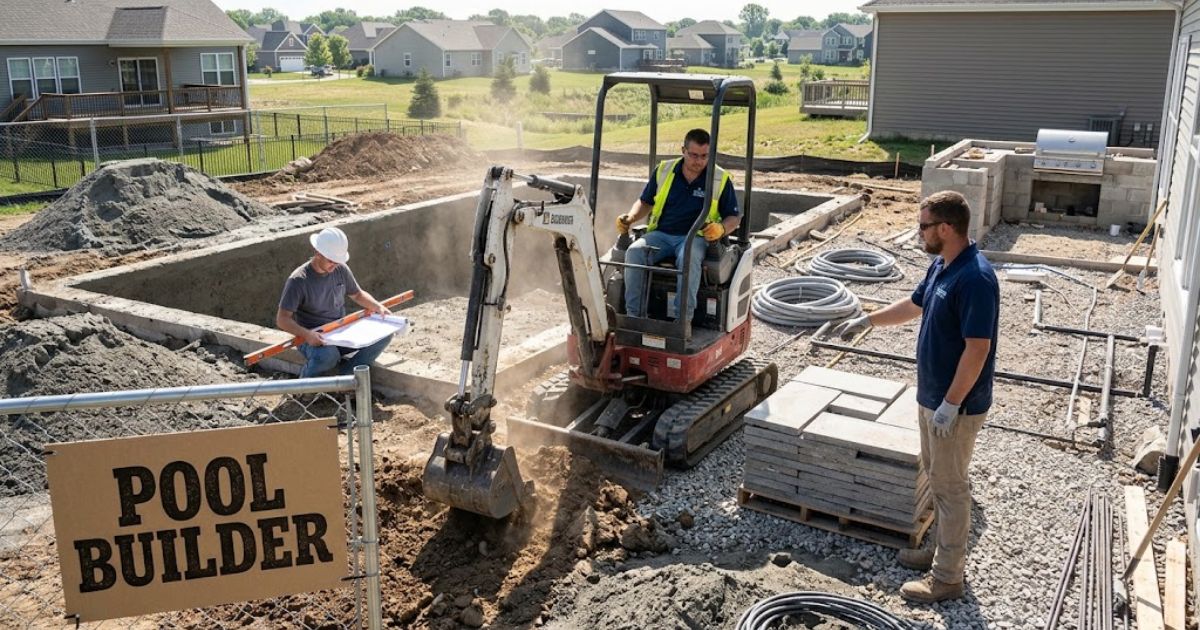
A pool builder is a licensed professional or company that designs, plans, builds, and finishes swimming pools for homes, resorts, schools, and other properties. The role covers the full journey of a pool project: the first conversation with the client, the design and pricing, the permits, the construction itself, and the handover of a finished, working pool. Because one person or team is responsible from start to end, a pool builder acts as the designer, salesperson, project manager, and problem solver all at once.
My Journey to Becoming a Passionate Pool Builder
I joined the family swimming-pool business because I wanted a creative outlet and a solid living, so I spent four years cleaning pools, where I skimmed and vacuumed every week, diagnosed leaks, and repaired equipment. That hands-on work of repairing existing pools gave me real training in the service world, and I played the long game by adding advanced building and design classes. After six years as a technician, I landed my first build in California, stepping into my new role as a full-fledged Pool Builder where I suddenly became the designer, salesperson, and project manager all at once.
The sale turned out to be the easy part, because I studied the real estate listing and the property on Google Earth, then built a 3D rendering and a video presentation for my client. My customer loved it, and that moment showed me how much responsibility every Pool Builder carries. Mike Bradley of NorCal Pool Production in Penryn told me to control my growth and stay away from the biggest pools early on, and I still follow that advice today.
Important Lessons Learned On My First Pool Build
I learned that vendors know their own phase, but I still need enough building knowledge to catch mistakes before they turn expensive. When a crew ignores my design, I follow my instincts, and trusting my gut has saved me more than once. A smart builder also asks trusted builders for advice about challenges, because the best ones want to create great pools and lift the whole industry.
Managing Site Documentation
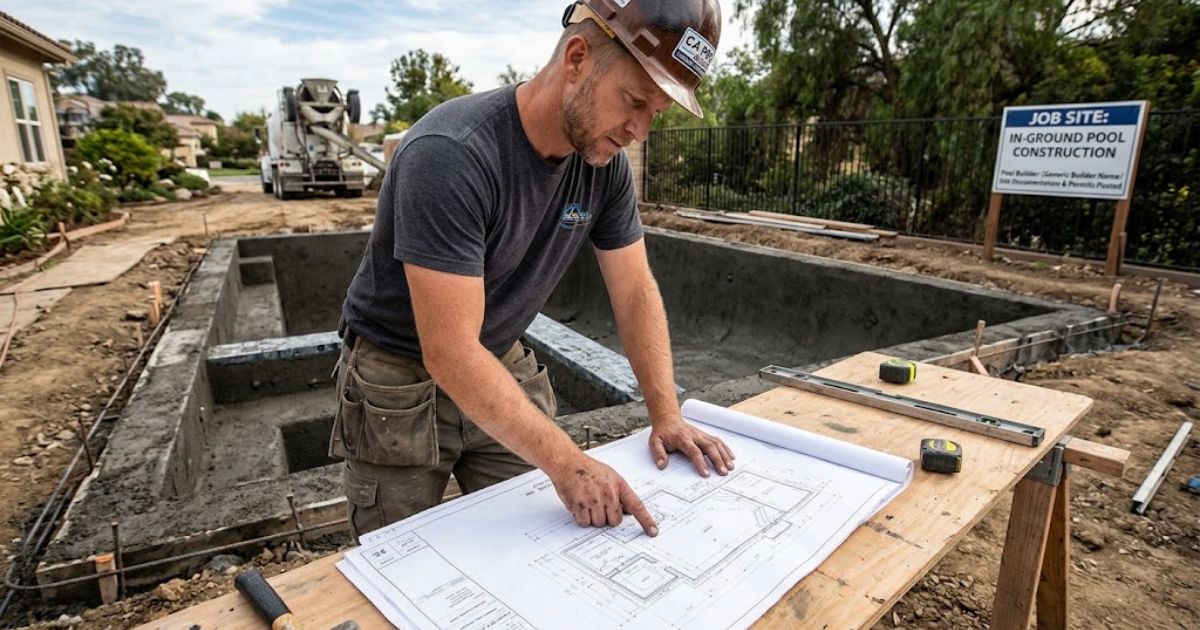
I keep permits, signs, and project notices posted on the job site, because strong documentation supports project organization and legal compliance. Subcontractors, inspectors, and trade workers all read that paperwork, so centralized communication stops miscommunication, and I never remove anything from the work area. Getting everything in writing matters just as much, since verbal agreements vanish the moment an invoice shows mysterious additional charges.
A cave-in once added sixteen extra yards of gunite to my job, and the excavator and the gunite company started finger-pointing over the over-digging. That mess taught me to settle the blame before work starts. Now I hire an excavation company that also shoots gunite, or I sign an agreement that makes one team own the risk.
Project Timing & Finishing
Most builds take three to four months, but my client set a hard deadline of June 1st, and weather and setbacks hit us right away. Missed inspections and delays piled up, rain kept falling, and I spent a Sunday jackhammering and waterproofing because a storm threatened the flashed shell. We still missed the date, so we booked plaster day for five days later.
Across all the phases, from gunite to plaster, I rely on a clearly defined process, so my sales system starts with Step 1, a simple conversation, and then moves into a planning process and an execution process. Patience in plastering pays off, so I give the final finishes proper curing time and the right water chemical balance before deck construction or landscape work begins. When I finally saw the finished spa, every late night felt worth it.
Clues Your Pool Builder Has It Together
Choosing a pool builder feels a lot like ring shopping, because you want lifelong quality without lifelong debt, and a trustworthy jeweler shapes the whole decision. An inground pool costs far more than an engagement ring, so I tell every family that price and a discount matter less than the quality of the pool contractor. River Pools focuses on fiberglass pools and explains all 3 pool types along the pool journey, and this guide will help you with evaluating pool builders.
How to know if a pool builder is worth your time
A good company shows online reviews and ratings with an average of 4 stars or higher, and it shares references from past customers. An established team posts pictures of its own projects, follows installation best practices such as gravel backfill for fiberglass pools, and backs the work with a good installation warranty. I also listen for honest talk about past challenges, and I look for a clear sales, planning, and execution approach.
1. Online reviews and ratings
I check Yelp, Google, and Facebook, and once a company has 50+ reviews, the average shows how its customers really feel. Look for a builder rated 4+ out of 5, because a lower score often points to a mediocre experience or a bad experience. I would never book a 3.5-starred hotel, which is a low-commitment stay, so I refuse that risk on a pool project that costs tens of thousands of dollars and lasts decades, and I always read how each pool builder answers negative reviews.
What if there aren’t any reviews?
A pool company with few online reviews gives you insufficient data, and that does not automatically mean trouble. I stay extra aware during my vetting and lean harder on the reference list. That list often tells me more than any star rating.
2. List of all customers/references
Asking for references can feel awkward, so I start by asking how many how many pools the contractor installed last year, and then I ask for the reference list. A good pool builder hands over the vast majority of its customers, and a claim of 40 pools with only 15 people on the list is a red flag. Then I call the references and ask what made the job an enjoyable experience, what felt least enjoyable, what they would do differently, which pool options and accessories they chose, how the team handled challenges and problems, and whether they would use the pool builder again.
3. Pictures of their own projects (if established)
Established pool contractors show photos of their own pool projects, not stock photos. I ask whether the images come from their jobs, because some companies borrow pictures from someone else’s site. That one question tells you a lot.
What if they’re a new business?
A new business may have few photos, and even independent installers of River Pools products start that way. Newly established pool builders can still earn your trust, so I give the other 6 points more weight. I judge them on their process and their references instead.
1. Preparing Your Outdoor Space
Your yard becomes an active construction zone, so I prepare the outdoor space with safety first. I block access for children and pets and keep the area unobstructed for the crew. Site awareness also prevents accidental damage, like footsteps and handprints in freshly poured concrete.
2. Pre-Excavation & Utility Line Marking
Before digging, pre-excavation work needs utility identification and utility line marking to avoid costly accidents and delays. Municipalities answer dig alerts and send representatives to mark underground lines, and these marked utilities include gas, electric, and communication connections. Unmarked lines, like sewer and drainage, need due diligence and may call for re-routing or other adjustments, so homeowners must give property access and let utility workers cover the grounds.
3. Assessing Gas Meter Capacity
A gas-powered pool heater often needs an upgrade to your household gas meter, so I check the gas meter capacity early. Contractors explain the heater requirements and handle utility coordination for you. Local gas providers usually do the work free of charge on request.
4. Site Barriers & Compliance: How a Pool Builder Ensures Safety
Site barriers protect everyone, so as a dedicated Pool Builder, I construct enclosure barriers such as fences and perimeter walls to exact safety heights. Many applicable jurisdictions require barriers at least 5 feet high, and local building codes set strict height regulations. I carefully check every rule before we pour, ensuring that compliance and safety always keep the project moving forward smoothly.
Frequently Asked Questions
1. How do I choose the right Pool Builder for my backyard project?
Look for a licensed and insured contractor with a strong portfolio, positive local reviews, and transparent pricing. Always ask for references and ensure they handle all necessary permits and warranties.
2. How long does the typical swimming pool installation take?
On average, a standard inground pool takes anywhere from 6 to 12 weeks from the initial excavation to the final fill. However, timelines can vary based on weather, design complexity, and permit approvals.
3. What is the difference between fiberglass, vinyl-liner, and concrete pools?
Concrete offers ultimate customization and durability but takes longer to build. Fiberglass provides quick installation and low maintenance with a smooth finish. Vinyl-liner pools are generally the most budget-friendly upfront option with customizable shapes.
4. What kind of maintenance should I expect after installation?
Routine maintenance includes testing and balancing water chemistry weekly, skimming debris daily, running the pump 8 to 12 hours a day, and cleaning the filter regularly to keep your water crystal clear and safe.
5. What financing options are available when hiring a professional Pool Builder?
Many contractors partner with specialized home improvement lenders to offer flexible financing plans, such as low-interest personal loans, home equity loans (HELOCs), or payment milestones tied to construction phases.