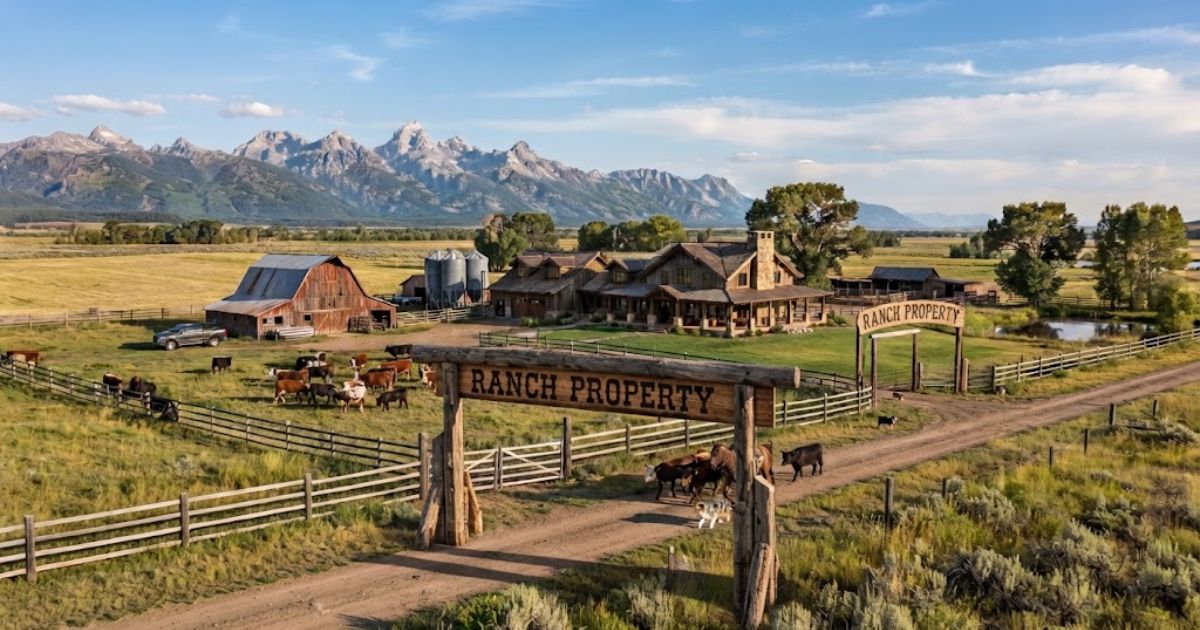
The best ranch property agents in Wichita know ranch property inside out and sell ranch real estate with local detail. They handle farm and ranch real estate, farm and ranch land, agricultural property, and rural property for Kansas buyers. Most work inside a rural real estate brokerage that offers full land brokerage services.
Buyers who search for ranch land for sale or ranches for sale in Kansas often start online, then call someone who lives the work. I once watched a first-time buyer use Kansas farm and ranch real estate knowledge to catch a failing fence on a Wichita Kansas ranch property. That help comes from ranch real estate agents, ranch brokers, land and ranch brokers, and any steady farm and ranch land agent.
What Kinds of Land Do Ranch Property Agents Sell?
Agents sell everything from weekend recreational ranch property to large-acreage land and working farmland. They also list pasture land, a legacy ranch, and premier rural properties. Some specialize in luxury ranches and lifestyle ranches.
Each type needs a different eye, so ask your agent which sales they closed last year. A buyer who wants quiet evenings needs different advice than a buyer who wants cattle income. Good agents say so plainly and match you with the right listing.
What Services Should a Ranch Agent Offer?
How Do Agents Help Buyers?
Good agents start with buyer representation, which means they work only for you. They run investment analysis and financial analysis before you commit. Then they guide acquisitions through a clear acquisition strategy.
I always ask about site selection, negotiations, and due diligence support, because those steps save the most money. Strong agents also find off-market opportunities through property sourcing long before a sign hits the fence. That access often decides who wins the best tracts.
How Do Agents Help Sellers?
Sellers need seller representation that protects both price and privacy. The agent starts with property marketing backed by a market value analysis and wider market analysis. Then they pick a competitive pricing strategy that fits today’s buyers.
Smart agents explain property valuation and valuation and negotiation strategies in plain words, so you never guess. They run confidential marketing, apply qualified buyer screening, and close dispositions without neighborhood gossip. Many also reach buyers through nationwide buyer outreach and trusted broker networks.
What About Auctions, Leases, and Paperwork?
Agents also manage transaction management, lease renewals, and land consulting. They act as landlord representation or tenant representation, depending on your side. Some add land auction services when a quick, open sale makes sense.
Ranch auctions work best with strong auction marketing, because bidders need time to inspect the land. Agents also share appraisal resources, lending resources, and a development potential assessment for land near town. Together with long-term land investment planning and regional market analysis, those tools turn a hunch into a plan.
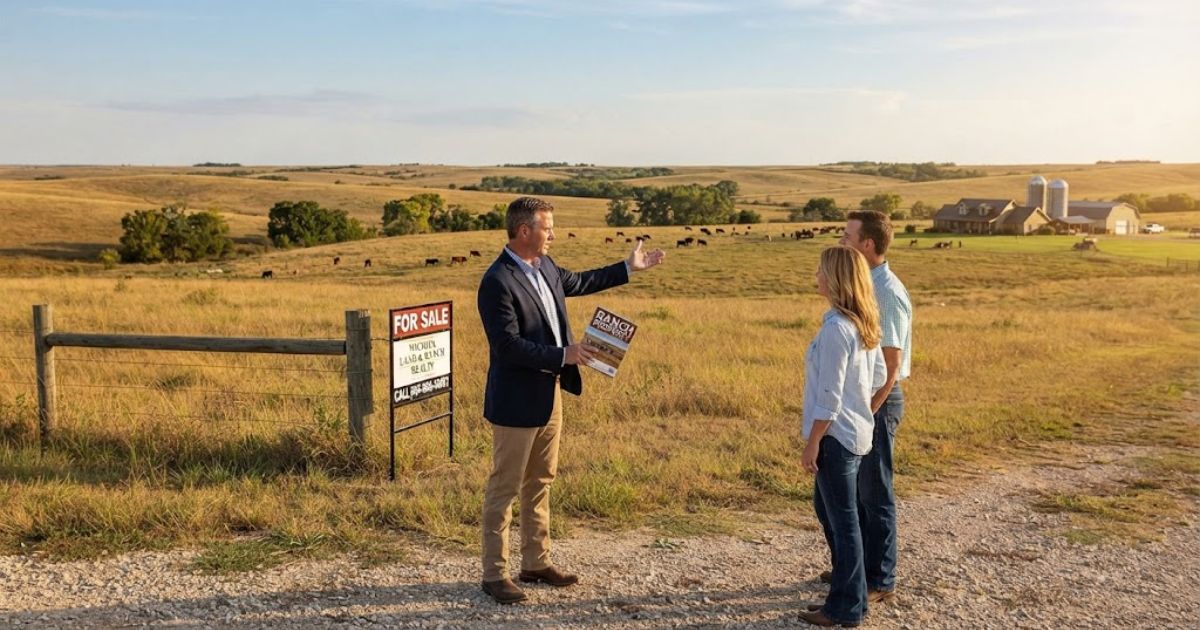
What Types of Ranches Can You Buy Near Wichita?
Which Ranches Raise Cattle and Horses?
Cattle ranches run the show in Kansas, from a small cow-calf operation to big stocker cattle ranches. Some buyers prefer livestock and cattle ranches that mix animals. Others want horse and equestrian properties.
Tourism fans look at dude ranches and guest ranches, which earn income from visitors. Investors sometimes choose corporate ranches, and water lovers hunt for live water ranches with year-round creeks. Each type demands different barns, fencing, and staff, so tour several before you commit.
Where Do Hunters and Anglers Shop?
Hunters look for hunting land and hunting and fishing ranches with strong cover. Anglers prefer fishing properties and recreational ranches. Many families want recreational land and waters for year-round use.
Buyers chasing deer want whitetail hunting properties or mule deer hunting land, while bird hunters pick upland bird hunting properties. Some choose conservation properties or timberland and forest, and agents call all of these sporting properties. Visit during hunting season at least once, because a property can look perfect in July and empty in November.
Which Farms and Small Ranches Fit Smaller Budgets?
Ranchettes and small ranches suit buyers who want room without a huge bill. Farms and farmland also range widely, from dryland farm acreage to irrigated farmland. Investors often favor investment cropland and investment farmland.
Some agents specialize in transitional land, agricultural development land, and mixed crop and cattle farms. Others guide family farm transitions and sell legacy family farmland, river-bottom farmland, feedlot-adjacent ranches, and large grazing ranches. I like asking sellers why they are leaving, because the answer often reveals hidden value.
What Should You Check About the Land Itself?
How Do Soil and Water Change the Price?
The best ranch property agents in Wichita always check soil and water before anything else. They study soil types, grazing capacity, and water access first. Then they confirm water rights in writing.
Farmers also weigh crop productivity, wildlife habitat, and center-pivot irrigation on irrigated ground. Cattle buyers check nearby feedyards and cattle feeding infrastructure, plus open range grazing access. Fertile soils often sit along creek and river lines.
What About Grass, Crops, and Mineral Rights?
Kansas offers tallgrass prairie in the Flint Hills and High Plains farmland in the west. Farmers grow dryland wheat production and irrigated row crops on cropland. Cattle graze pastureland across rolling terrain.
Timbered river bottoms and river valley ranches add shade, game, and scenic landscapes. Always ask about mineral marketing, mineral rights, and conservation easements, because they change what you can do. Count acreage and tract size carefully, then respect land stewardship, grain production, and agricultural heritage.
Where in Kansas Should You Look for a Ranch?
Which Counties and Regions Offer the Most Choice?
Agents cover South Central Kansas first. That region includes Sedgwick County, Harvey County, Butler County, Sumner County, Reno County, Cowley County, and Kingman County. Many also work the Flint Hills and Central Kansas.
Buyers also explore McPherson County, Marion County, Rice County, Harper County, Barber County, Pratt County, Chase County, Greenwood County, Lyon County, and Wabaunsee County. Farther afield, Southwest Kansas, Northwest Kansas, North Central Kansas, Eastern Kansas, and Southeast Kansas offer different prices and land. Drive each area on a weekday, because road access and neighbors tell you plenty.
How Do Towns and the Wichita Market Fit In?
Towns like Andover, Kansas, Hesston, Kansas, and Park City, Kansas give quick access to Wichita. Salina, Kansas, Manhattan, Kansas, Emporia, Kansas, and Kansas City serve buyers farther north and east. Each town offers different shops, schools, and travel times.
The Wichita real estate market shapes demand, because city buyers often want weekend land within an hour or two. Many agents join the Wichita MLS and know Wichita real estate professionals and top producing agents in Wichita personally. Ask how many land sales they closed, not just home sales.
Which Credentials and Traits Should Your Agent Have?
What Do Land Credentials Mean?
A land consultant often holds the Accredited Land Consultant (ALC) title. Others earn Realtor Land Institute (RLI) membership or join the LandBroker Co-op. Auction experts add the Certified Auctioneer Institute (CAI) badge.
An auctioneer can speed a sale, while a supervising broker or broker/owner keeps paperwork honest. A REALTOR, a sales associate, or a licensed real estate agent can all help, but ask about land experience. Also ask about their land professionals network, then verify each license with the Kansas Real Estate Commission.
What Personal Traits Separate Great Agents?
Great agents work like experienced land brokers and act as an agricultural real estate expert for every client. They live by cowboy ethics and a “Live It to Know It” philosophy. That hands-on land experience builds trust fast.
I trust an agent who acts as a trusted advisor, builds long-term relationships, and shows real local market expertise. Many also run a commercial real estate brokerage, and they bring a title company, title services, a mortgage lender, and an insurance agent to the table. Ask for references before signing anything.
How Much Does a Ranch Agent Cost, and Is It Worth It?
Commission is negotiable, and a skilled agent often earns it back through stronger pricing. Agents guide the closing process, protect property rights, and coordinate agricultural lenders. They also work with trust companies, land investors, and 1031 exchanges.
Smart agents study land market trends, sold properties, and new listings before they set a price. They boost listing exposure with digital marketing for land listings and targeted marketing campaigns that reach national bidders. A real estate auction invites competitive bidding, so ask your agent when it beats a private sale.
Frequently Asked Questions
How long does it take to buy a ranch?
Most ranch purchases take 60 to 120 days from signed offer to closing. Surveys, water checks, and loan approvals eat up most of that time. Cash buyers often finish a few weeks sooner than financed buyers.
I tell buyers to book the survey and the water test in the first week. Delays there push every other date back. Keep your lender in the loop, and ask the seller for old fence and well records early.
How much down payment do land loans need?
Land loans often ask for 20 to 35 percent down, which is higher than a typical home loan. Banks treat open land as riskier than a house. Farm credit lenders sometimes accept less when you show steady farm income.
Rates and terms change by lender, so compare at least three offers. Ask whether the loan allows balloon payments or early payoff. A good agent will introduce you to local lenders who understand rural deals.
Is a Ranch Property a good investment?
A Ranch Property can hold its value well, but it rarely pays off quickly. Land prices tend to climb slowly, and grazing or crop income covers part of the costs. Expect taxes, fencing, and water upkeep every single year.
I have seen owners earn steady lease income from grazing while the land value grew. Others lost money by overpaying for a pretty view. Run the numbers first, then buy the land that fits your budget and your goals.