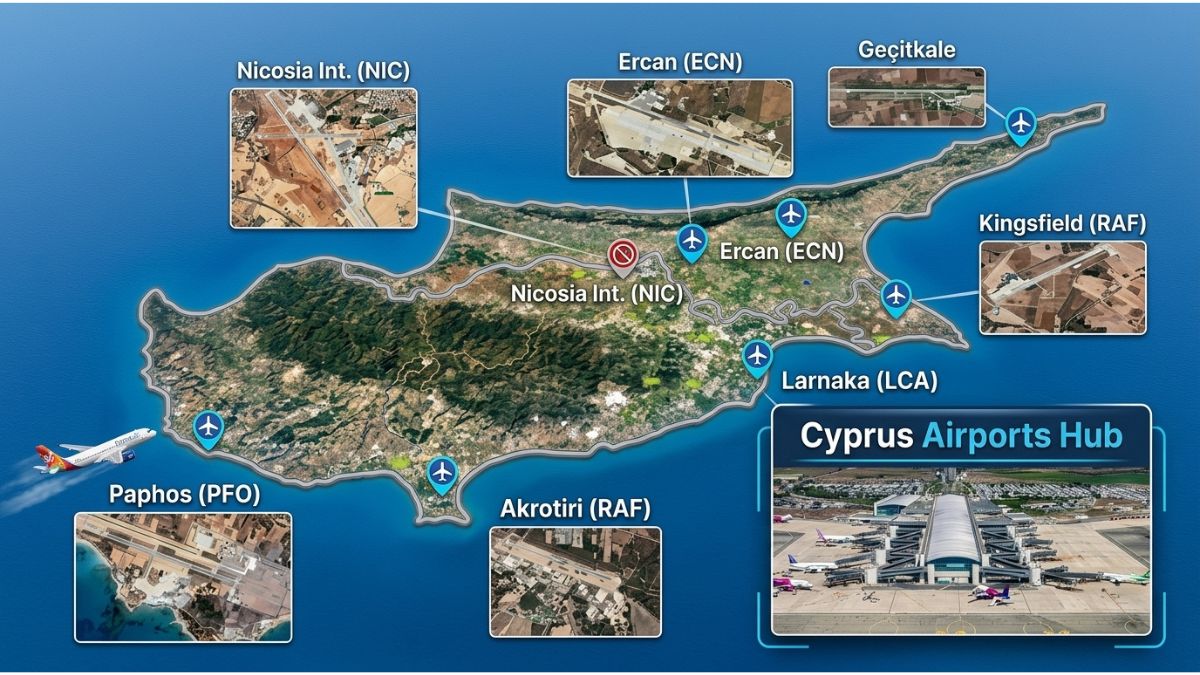
Cyprus airports comprise two official international gateways in the Republic of Cyprus Larnaca (LCA), the primary hub, and Paphos (PFO), catering mainly to low-cost and charter flights. Additionally, Ercan International Airport (ECN) serves Northern Cyprus, accessible exclusively via Turkey. Together, these entry points connect the island across Europe, the Middle East, and North Africa.
I still remember standing at arrivals in Larnaca for the first time, watching the queue move faster than I expected and wondering why nobody had told me how simple cyprus airports actually are to navigate. Cyprus sits at a crossroads between Europe, the Middle East, and North Africa, and its airports reflect that mix of cultures every single day. Whether you are flying in for a beach holiday, a business trip, or a stopover on a longer journey, understanding how cyprus airports work will save you time, money, and a fair amount of stress.
Getting to Know Cyprus Airports Before You Travel
Most people assume Cyprus only has one main airport, but that is not the full picture. Cyprus airports actually include a handful of facilities spread across the island, each serving a different purpose and a different type of traveller. Some handle heavy international traffic every day, while others sit quiet, restricted, or even abandoned, and knowing the difference can genuinely shape how you plan your trip. Once you understand the layout, booking flights and planning airport transfers becomes far easier, which is exactly why I break everything down below, heading by heading, the way I wish someone had done for me on my first trip.
I have kept the explanations practical rather than academic, because most travellers just want to know which airport suits their plans and how to get there without any last-minute confusion. Over the years I have flown in and out of the island more times than I can count, and every single time I learn something new about how the system actually works on the ground.
Save Time and Prebook Airport Parking
Nobody enjoys circling a car park with a boot full of suitcases, so I always secure my spot early now. If you book online in advance, you get lower prices and a guaranteed space, and this small habit alone has saved me real money over the years. Just remember that parking at the airport usually cannot be arranged less than 2 hours before departure, so build that buffer into your plans. Beyond parking, you can also reserve the Fast Track service and lounge access through the same booking online system, which turns a rushed morning into a genuinely convenient airport experience, and honestly, the benefit is worth every euro when you are travelling with kids.
SKY express
I flew SKY express on a whim last summer and came away impressed. This carrier brings Greece closer to Cyprus with daily flights from Larnaca to Athens and Thessaloniki, opening up a wider network of around 60 destinations across the region. In the warmer months, you can even fly direct to Heraklion, which cuts out a lot of unnecessary connecting time.
What stood out to me most was the comfort on board, thanks to a youngest fleet of 29 modern aircraft built with a lower environmental footprint, so it feels like a smart choice for anyone who wants easy access and a cleaner way to travel. The staff were friendly, the boarding process was quick, and I would happily book with them again on my next trip through the region.
Summary – Airports in Cyprus
Here is the short version I give friends who ask me for a quick rundown. There are 2 international airports open to regular travellers, Larnaca and Paphos, while Ercan in Northern Cyprus handles arrivals routed through Turkey. Nicosia Airport has sat closed since 1974, and the southern airports are run by Hermes Airports. Regular flights, both direct and seasonal, connect the island to Belgium and the Netherlands, which is useful if you are planning a trip from either country.
Cyprus Airports Overview
Beyond the two big names, the island has a few lesser-known facilities worth mentioning. In addition to the international terminals in the south, Cyprus is also home to Ercan Airport in the Turkish north, a site that is not recognized by the EU and remains accessible only through Turkey. The long-closed Nicosia Airport sits inside the UN buffer zone, a quiet reminder of the island’s history, and nearby you will find military airports such as Akrotiri, used by the RAF, and Tymbou, operated by the Turkish Air Force.
Altogether, that gives Cyprus two international airports for tourists plus a scattering of restricted-access sites that most visitors will never see up close. It is a strange mix of past and present, and once you understand it, the rest of the island’s history starts to make a lot more sense too.
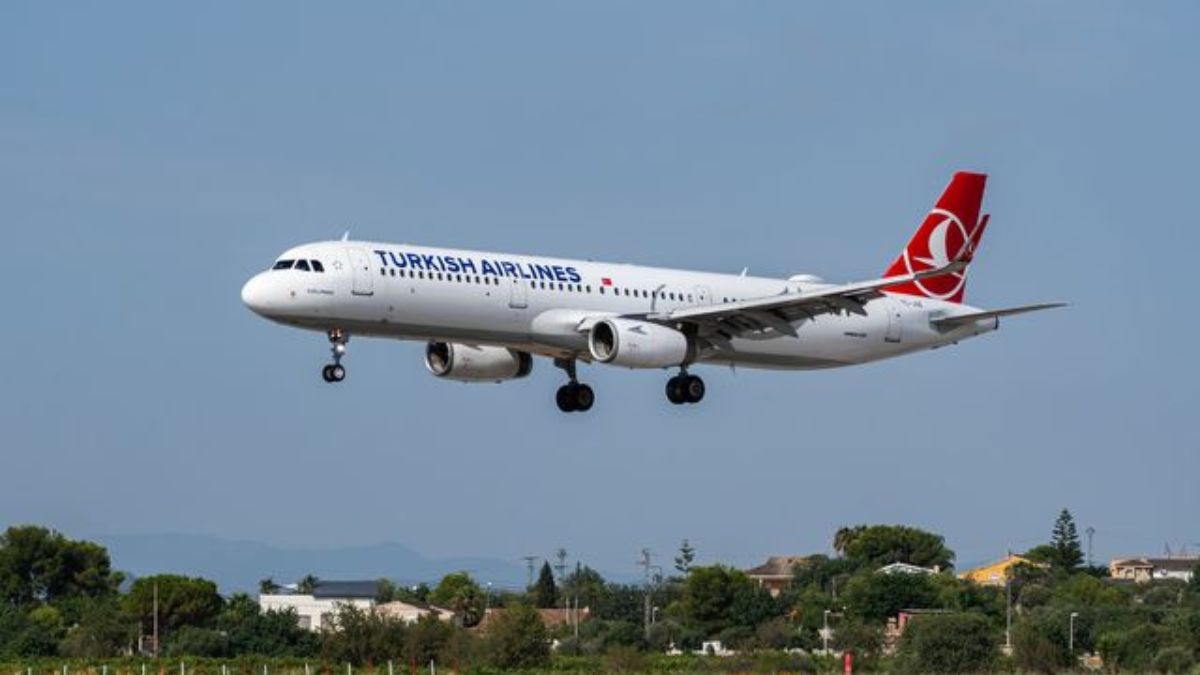
Larnaca International Airport (LCA)
Larnaca is where most people, myself included, land first. As the Largest airport in Cyprus, Larnaca International Airport handles the bulk of international flights into the country and remains the most popular airport for both tourists and expats. It sits right off the highway, roughly 30 min from Limassol, so it is genuinely accessible no matter where on the south coast you are headed. The terminal is Managed by Hermes Airports Ltd., and honestly, LCA feels calmer and better organised than plenty of airports I have used in far bigger countries. Signage is clear, the walk from gate to taxi rank is short, and even during peak summer weekends the queues rarely feel overwhelming.
Paphos International Airport (PFO)
Paphos has a different personality altogether, and I actually prefer it for quieter arrivals. This Smaller airport handles mostly charter flights and holiday traffic, which makes it a natural alternative for anyone heading toward western Cyprus. Paphos International Airport sits close to relaxed coastal towns like Paphos town itself and Coral Bay, so if your holiday plans centre on the western side of the island, PFO will almost certainly save you a long transfer. I have landed here late at night more than once, and the smaller scale actually makes the whole process feel less stressful than a bigger hub.
Ercan Airport (ECN) – Northern Cyprus
Northern Cyprus works a little differently, and it caught me off guard the first time I looked into it. Ercan Airport, known by the code ECN, is not internationally recognized, so every route runs through Turkey first. Flights typically connect via Istanbul, Ankara, or Izmir before reaching the northern part of the island. It remains accessible mainly to residents of Northern Cyprus and travellers with a specific reason to visit that side of the buffer zone. If you plan to cross over from the south during your stay, it helps to research the current border rules well before your trip.
Nicosia Airport
There is something almost eerie about walking past this one on a map. Nicosia Airport has stood Closed since the 1974 conflict, and it has been no longer in use ever since. Today it exists as an Abandoned airport sitting inside the UN buffer zone, and while you cannot visit it casually, it remains Historically important as a symbol of the island’s divided past.
Flights from Belgium & the Netherlands to Cyprus
For readers based further north, this section matters most. Flights between Belgium, the Netherlands, and Cyprus run throughout the year, with extra capacity added during the summer season.
Larnaca or Paphos Airport?
I get asked this question constantly, and the honest answer is that it depends on your itinerary. Cyprus offers two major airports in the south, and choosing between them comes down to price and convenience. Larnaca Airport, or LCA, is the largest airport on the island, with more scheduled flights but often expensive tickets, while Paphos Airport, or PFO, tends to be smaller and more popular with low-cost airlines such as Ryanair.
Both are fine choices, but where you depart from can make costs vary greatly, so it pays to compare both before you book. My own rule of thumb is simple: check both airports before locking in dates, since a small shift in your travel window can change which one comes out cheaper.
Flying to Cyprus from Belgium
Belgian travellers have more options than they often realise. Flying from Belgium to Cyprus is straightforward, with several airlines competing on the route throughout the year.
Brussels Airport (Zaventem)
Zaventem was actually my starting point on one trip, and the choice of airlines surprised me. Direct Daily flights run to Larnaca with Brussels Airlines, Lufthansa, and Austrian Airlines, while Ryanair flies straight to Paphos, especially during the summer months. Brussels Airport, known locally as Zaventem, tends to sit at a Guide price return of around €180–€300, which reflects its status as a larger, more premium hub.
Charleroi Airport
If budget matters more than convenience, Charleroi is worth a look. This airport offers a Cheaper alternative, particularly for Ryanair flights heading to Paphos, though you may need a transfer through Milan or Budapest depending on the season. The Guide price return here typically falls between €90–€180, which makes Charleroi Airport a solid pick for anyone travelling on a tighter budget.
Flying to Cyprus from the Netherlands
Dutch travellers are equally well served on this route. Flying from the Netherlands to Cyprus is easy year-round, with several major airports offering direct or connecting options.
Amsterdam Schiphol (AMS)
Schiphol remains the obvious starting point for most Dutch travellers, and I have used it myself more than once. Direct flights to Larnaca run with Transavia, TUI, and easyJet, giving you plenty of choice depending on your budget. Routes to Paphos tend to run seasonally, sometimes with a transfer included, but Amsterdam Schiphol, or AMS, still offers the widest range of departure times on the island route. For anyone who values flexibility over the absolute lowest fare, starting from this hub usually makes the whole trip easier to plan.
Eindhoven Airport (EIN)
Eindhoven is the airport I actually recommend to budget-conscious friends. Popular with budget travelers, EIN offers Direct flights to Paphos with Ryanair, sometimes for as little as €60 return if you commit to booking early. On top of the fares, Eindhoven Airport is known for Excellent accessibility and genuinely cheap parking, which adds up to real savings once you factor in the whole trip.
Rotterdam The Hague Airport
This smaller Dutch airport rarely gets the credit it deserves. Seasonal flights run from here to Larnaca, and because the terminal is Small, the whole process feels fast, with short waiting times at check-in and security. If you live near Rotterdam The Hague Airport, it is worth checking before automatically defaulting to Schiphol.
Final Thoughts on Cyprus Airports
After several trips through Larnaca, Paphos, and even a brief detour researching the northern side, I keep coming back to the same conclusion: cyprus airports are more varied and better connected than most first-time visitors expect. From prebooking parking and choosing the right budget carrier, to understanding the history behind Nicosia’s closed terminal, a little preparation goes a long way toward a smoother trip. Whichever route you take into the island, knowing how cyprus airports fit together will make your journey easier from the moment you land.
Plan your parking early, compare both southern airports before booking, and check the budget carriers out of Belgium and the Netherlands if you are travelling from that direction and small choices like these make the difference between a stressful arrival and a smooth one. That is really the whole point of understanding cyprus airports properly before you fly: less guesswork, fewer surprises, and more time to actually enjoy the island once you land.
Frequently Asked Questions About Cyprus Airports
Cyprus airports map
Cyprus has two internationally recognized airports, both located on the coast of the Republic of Cyprus. Larnaca International Airport sits on the southeastern coast, close to Larnaca city and roughly 30 minutes from Limassol, while Paphos International Airport sits on the southwestern coast near the town of Paphos. In the north, Ercan Airport serves Northern Cyprus and lies close to Nicosia, though it is only reachable through Turkey since it is not internationally recognized.
Cyprus airports list
Cyprus airports include Larnaca International Airport (LCA), Paphos International Airport (PFO), and Ercan Airport (ECN) in Northern Cyprus. The list also includes the closed Nicosia Airport, which has sat unused inside the UN buffer zone since 1974, along with two military airfields: Akrotiri, used by the RAF, and Tymbou, used by the Turkish Air Force.
Larnaca Airport
Larnaca Airport, officially Larnaca International Airport, is the largest and busiest airport in Cyprus. It handles the majority of international flights into the country, serves as the main entry point for tourists and expats, and is managed by Hermes Airports Ltd. Its coastal location and easy highway access make it the first stop for most visitors landing in Cyprus.
Cyprus airport code
The main airport codes in Cyprus are LCA for Larnaca International Airport and PFO for Paphos International Airport, both assigned by IATA. In Northern Cyprus, Ercan Airport uses the code ECN, though it operates outside the international aviation recognition system due to its political status.
How many international airports in Cyprus
The Republic of Cyprus has two internationally recognized airports: Larnaca International Airport and Paphos International Airport. Northern Cyprus also operates Ercan Airport, but it is not internationally recognized and can only be reached via flights connecting through Turkey, so it does not count toward the officially recognized total.
Cyprus airports departures
Departure information for Larnaca and Paphos airports updates in real time and is best checked directly through the official Hermes Airports website or app, since schedules can shift due to weather, air traffic, or airline changes. Arriving with extra time before your flight, especially during peak summer months, helps you avoid last-minute stress at check-in and security.
Cyprus airports arrivals
Arrivals for both Larnaca and Paphos are also tracked live on the Hermes Airports website, allowing travellers or people picking someone up to monitor whether a flight is on time, delayed, or has landed. Both terminals are relatively compact compared to major European hubs, so the walk from arrivals to taxi ranks or car parks is usually short.
Larnaca International airport code
Larnaca International Airport uses the IATA code LCA, the standard three-letter identifier used on tickets, boarding passes, and flight tracking systems worldwide.